Digitizing negatives and slides is easier when your scanner can reduce dust and scratches before they become hours of retouching. The right model can also preserve more detail, color, and dynamic range from valuable film originals.
Our 2026 roundup compares dedicated 35mm scanners with flatbed and all-in-one options, covering image quality, supported formats, software, display features, and everyday usability.
Best 10 Film Scanners with Dust Removal Picks for 2026
High-Resolution Dust Removal Pick

- 7200 dpi scanning for 35mm film
- Infrared dust and scratch detection
- Includes SilverFast SE Plus 9
Best For: Detailed 35mm negative and slide scanning
Advanced Flatbed Option

- 6400 dpi resolution for detailed scans
- 4.0 Dmax for shadow detail
- Dual-lens system for optimized scanning
Best For: High-quality photo and slide scanning
Newest Infrared Enhancement

- 7200 dpi resolution with infrared enhancement
- Supports multiple 35mm film formats
- Includes SilverFast Ai Studio 9 and IT8 target
Best For: Advanced 35mm archiving and batch scanning
Easy LCD Scanning Choice
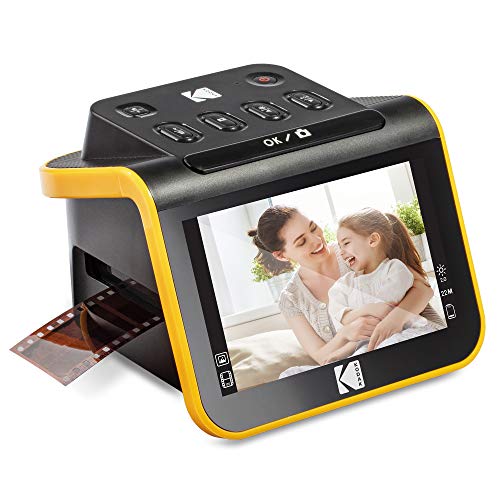
- Supports 135, 110, 126, and 50mm formats
- Built-in 5-inch LCD preview screen
- Saves directly to SD or SDHC cards
Best For: Simple home digitizing across multiple film formats
Professional Flatbed Choice

- Scans photos, slides, negatives, and medium-format film
- 6,400 dpi photo resolution with 4.0 Dmax
- Dual-lens system selects the appropriate scanning lens
Best For: Mixed-format photo and film scanning
Advanced 35mm Detail
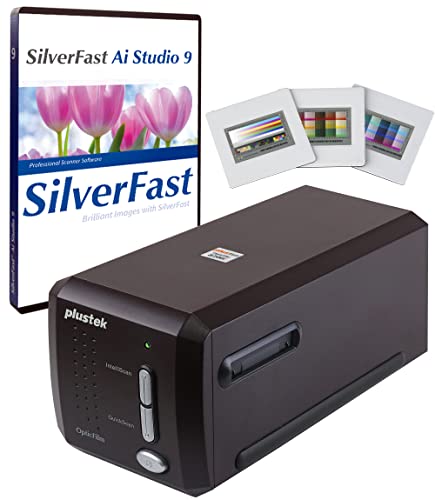
- Built-in infrared processing with SilverFast iSRD
- Includes SilverFast 9 and an advanced IT8 target
- Dedicated 35mm scanner with 7,200 dpi resolution
Best For: Calibrated 35mm scanning and restoration workflows
Easy Standalone Scanning
Magnasonic FS71 24MP Film Scanner

- Scans multiple negative and slide formats
- 24MP JPEG output with SD-card storage
- 5-inch display and computer-free operation
Best For: Fast family-photo and film archiving
Best All-in-One Choice

- 6400 dpi optical resolution
- Digital ICE dust and scratch reduction
- Scans film, photos, and documents
Best For: Mixed home scanning and film restoration
Best Dedicated Film Detail

- 7200 dpi 35mm film scanning
- Infrared dust and scratch removal
- SilverFast software included
Best For: High-detail 35mm film and slide digitizing
Best Standalone Touchscreen Workflow

- 7-inch touchscreen preview and editing
- 13MP sensor for negatives and slides
- Supports 135, 126, and 110 formats
Best For: Easy, computer-light family film digitizing
High-Resolution Dust Removal Pick – Plustek OpticFilm 8200i SE
The Plustek OpticFilm 8200i SE is a strong choice for photographers seeking film scanners with dust removal for 35mm negatives and mounted slides. Its integrated infrared channel helps detect surface dust and scratches, while 7200 dpi resolution supports detailed scans.
Best For: 35mm film users who want high-resolution scans and infrared-assisted defect removal on Windows or Mac.
Pros:
- Integrated infrared dust and scratch detection can reduce manual retouching.
- 7200 x 7200 dpi resolution and 48-bit input support detailed color scans.
- Includes SilverFast SE Plus 9 and Plustek QuickScan software.
- Supports Windows 7 through 11 and Mac OS 10.7 through 14.x.
Cons:
- Designed for 35mm negatives and mounted slides rather than a broader range of film formats.
- Requires software downloads for the supported operating systems.
With high optical resolution, multi-exposure support, and built-in infrared defect detection, this model is well suited to careful 35mm archiving where image cleanup matters.
Advanced Flatbed Option – Epson Perfection V800 Photo
The Epson Perfection V800 Photo is a versatile flatbed-style option for shoppers comparing film scanners with dust removal, although the supplied specifications do not specifically confirm an infrared dust-removal feature. It emphasizes 6400 dpi scanning, strong tonal range, and a dual-lens system for photo and slide work.
Best For: Users who prioritize high-resolution photo and slide scanning, smooth tonal gradations, and a dual-lens design.
Pros:
- 6400 dpi resolution is suited to detailed scans.
- 4.0 Dmax supports shadow detail and smooth tonal transitions.
- Exclusive Dual Lens System selects between lenses for different scanning needs.
- 48-bit color and 16-bit grayscale depth support substantial image information.
Cons:
- The supplied notes do not list integrated infrared dust or scratch removal.
- At 20.9 pounds, it is considerably less portable than compact film scanners.
- Listed operating-system support is older than that of the newer Plustek model.
The V800 Photo is best considered when tonal performance and flatbed versatility matter more than a confirmed dust-removal workflow. Buyers specifically focused on infrared cleanup should verify the software and feature requirements before purchasing.
Newest Infrared Enhancement – Plustek OpticFilm 135i Ai
The Plustek OpticFilm 135i Ai is a modern choice among film scanners with dust removal, pairing 7200 dpi scanning with an infrared quality enhancer designed to improve dust and scratch detection. It also supports multiple 35mm formats and batch scanning for greater productivity.
Best For: Film archivists who need infrared-assisted cleanup, IT8 calibration, and support for regular, panoramic, or half-frame 35mm film.
Pros:
- Five-element lens design is intended to improve infrared dust and scratch detection.
- Includes SilverFast Ai Studio 9 and an Advanced IT8 Calibration Target.
- Supports regular 35mm, panoramic, and half-frame formats.
- Film holders allow scanning four slides or six frames from a strip at once.
Cons:
- The panoramic film holder is optional.
- Requires Windows 10 or later or macOS 10.15 or later.
- Its 6.2-pound weight is less convenient for frequent relocation than a compact basic scanner.
For demanding 35mm workflows, the 135i Ai combines high resolution, enhanced infrared performance, calibration tools, and batch capacity. It is particularly compelling when film variety and productivity are as important as dust reduction.
Easy LCD Scanning Choice – KODAK Slide N Scan
The KODAK Slide N Scan is a convenient, standalone-style option for digitizing several common film formats, but the supplied notes do not identify an infrared dust-removal system. Its 5-inch LCD, simple controls, and direct SD-card saving make it approachable for casual home archiving.
Best For: Families and casual users who want quick scans of 135, 110, 126, and 50mm slides without a complex computer-based workflow.
Pros:
- Supports 135, 110, and 126 negatives plus 50mm slides.
- 5-inch LCD enables previewing, editing, and gallery viewing.
- Quick-feeding trays support continuous loading.
- Saves files directly to an SD or SDHC card up to 32GB.
Cons:
- The supplied notes do not list infrared dust or scratch removal.
- SD card is not included.
- 22-megapixel capture and 24-bit color are less focused on professional-grade scanning than the Plustek models.
This KODAK model favors convenience over advanced restoration. Choose it for accessible multi-format digitizing and immediate viewing, but look to a dedicated infrared-equipped scanner when dust and scratches are a primary concern.
Professional Flatbed Choice – Epson Perfection V700 Photo
For shoppers comparing film scanners with dust removal, the Epson Perfection V700 is a versatile flatbed option for digitizing negatives, slides, photographs, and medium-format film. Its dual-lens system automatically selects the appropriate lens for the desired resolution, while its high resolution and 4.0 Dmax are designed for detailed image capture.
Best For: Photographers who need one scanner for photos, slides, negatives, and medium-format film.
Pros:
- Supports slides, negatives, photographs, and medium-format film.
- Offers 6,400 dpi photo-scanning resolution and up to 9,600 dpi listed resolution.
- Uses a dual-lens system to match the scanning resolution.
- Provides 4.0 Dmax for strong image-quality potential.
Cons:
- Its 6.6 kg weight makes it less portable than compact film scanners.
- Uses a USB connection rather than HDMI or standalone display output.
- The supplied notes do not specify a built-in dust-removal feature.
The V700 is the most flexible choice here for mixed-format scanning and high-detail photo work. However, buyers specifically seeking automated dust removal should verify the software and workflow included with the unit before purchasing.
Advanced 35mm Detail – Plustek OpticFilm 8300i Ai
The Plustek OpticFilm 8300i Ai is a dedicated 35mm option for shoppers seeking film scanners with dust removal capabilities. Its built-in infrared processing works with SilverFast 9 features such as iSRD, HDRi, Multi-Exposure, and NegaFix to support restoration and image optimization, while the included IT8 target is intended for precise color calibration.
Best For: 35mm slide users who want advanced software tools, infrared-assisted processing, and color calibration.
Pros:
- Includes SilverFast 9 Ai Studio and Plustek Quick Scan Plus.
- Built-in infrared processing and iSRD support are designed to help address dust and scratches.
- Includes an ISO 12641-2 compliant advanced IT8 calibration target.
- Supports 7,200 dpi scanning and 16-bit color depth.
Cons:
- Supports 35mm slides rather than the broader range of film formats handled by flatbed models.
- Its advanced workflow may require more setup than a standalone scanner.
- The supplied details list Windows support but do not provide a complete Mac system-requirements breakdown.
Among these models, the OpticFilm 8300i Ai is the clearest fit for dust- and scratch-conscious 35mm workflows because its software package includes infrared-based processing. It is a specialized scanner, so it is less suitable for medium-format film or general photo scanning.
Easy Standalone Scanning – Magnasonic FS71 24MP Film Scanner
The Magnasonic FS71 is a convenient choice for shoppers comparing film scanners with dust removal, although its supplied features focus on fast, standalone scanning rather than dedicated dust-removal processing. It converts several film and slide formats to JPEG files, includes a 5-inch display, and lets you adjust brightness and RGB color directly without a computer.
Best For: Families and casual users who want quick, computer-free digitization of multiple legacy film formats.
Pros:
- Supports 35mm, 110, 126, and Super 8 negatives plus 135, 126, and 110 slides.
- Scans and saves 24MP JPEG files to an SD card.
- Works without computer drivers or photo-editing software.
- Offers a 5-inch LCD display and HDMI output for viewing on a TV or monitor.
Cons:
- The supplied notes do not list dust-removal or infrared-cleaning technology.
- HDMI cable and SD card are not included.
- It is focused on convenience and JPEG output rather than advanced calibration features.
The FS71 is the easiest pick for quick home archiving across several older film formats. If dust removal is a priority, choose it only if you are comfortable handling cleanup separately, since the listed features do not include dedicated dust-reduction processing.
Best All-in-One Choice – Epson Perfection V550
The Epson Perfection V550 is a versatile option for shoppers seeking film scanners with dust removal alongside photo, document, and slide scanning. Its 6400 dpi optical resolution, built-in transparency unit, and Digital ICE technology support detailed film scans while reducing the appearance of dust and scratches.
Best For: Users who want one scanner for 35mm film, slides, photos, and documents.
Pros:
- 6400 dpi optical resolution and 48-bit color depth support detailed, vivid reproductions.
- Digital ICE technology removes the appearance of dust and scratches on film.
- Scans multiple photos at once and automatically crops each image into a separate file.
- ReadyScan LED technology requires no warmup time and contains no mercury.
Cons:
- Its 9.6-pound, 19.09-inch-wide design is less compact than dedicated film scanners.
- Uses a USB connection rather than the HDMI connectivity found on some standalone digitizers.
The V550 is a strong general-purpose pick when film restoration matters but document and photo scanning are also part of the workflow. Its OCR support and one-touch photo restoration add useful flexibility beyond film scanning.
Best Dedicated Film Detail – Plustek OpticFilm 8300i SE
The Plustek OpticFilm 8300i SE is a dedicated 35mm film scanner for buyers prioritizing high resolution and dust removal. Its infrared channel works with SilverFast iSRD software to detect and remove dust and scratches, while 7200 dpi scanning and multi-exposure support target detailed film digitization.
Best For: 35mm film and slide users who want dedicated scanning hardware with advanced software tools.
Pros:
- 7200 x 7200 dpi resolution can produce scans up to 69 megapixels.
- Built-in infrared channel and SilverFast iSRD software support automated dust and scratch removal.
- Includes SilverFast 9 SE Plus and Plustek Quick Scan Plus software.
- Supports Windows 7 through 11 and Mac OS 10.13 through 12.x.
Cons:
- It is designed for film rather than general photo or document scanning.
- The listed operating-system support does not mention newer macOS versions beyond 12.x.
For dedicated 35mm work, the 8300i SE places resolution and restoration features ahead of all-purpose convenience. The bundled software is especially useful for shoppers who want dust-removal tools included with the scanner.
Best Standalone Touchscreen Workflow – HP FilmScan 7
The HP FilmScan 7 is a convenient choice for shoppers who value simple, standalone film digitizing. Its 7-inch touch display provides on-device previews and editing, while the 13-megapixel CMOS sensor captures color and black-and-white negatives across several film formats.
Best For: Beginners and families digitizing mixed slide and negative collections with minimal computer work.
Pros:
- 7-inch color touch LCD supports previewing, editing, and displaying images on the device.
- 13-megapixel color CMOS sensor captures color and black-and-white negatives.
- Quick-feed tray and 50mm adapter support 135, 126, and 110 formats.
- USB transfer and HDMI output provide flexible viewing and sharing options.
Cons:
- The supplied notes do not specify dedicated dust- or scratch-removal technology.
- Its listed resolution is 1200 dpi, lower than the Epson and Plustek models.
- On-device editing may be less suitable for users seeking advanced computer-based restoration.
The HP stands out for ease of use rather than specialized dust removal or maximum optical resolution. Its touchscreen, broad format support, and HDMI output make it practical for casual collections and quick family archiving.
How We Picked These Film Scanners with Dust Removal
We selected models that offer a practical way to digitize negatives, slides, or both, with particular attention to infrared dust and scratch reduction where available. We also considered optical resolution, color depth, supported film formats, scanning workflow, included software, and whether each scanner suits occasional home use or a larger archive.
Not every scanner handles infrared cleanup in the same way. Dedicated Plustek film scanners are designed for detailed 35mm work, while Epson flatbeds provide broader format flexibility and can scan prints or documents. Consumer film converters often prioritize speed and convenience over maximum editing latitude.
Quick Comparison
| Best For | Look For | Typical Choice |
|---|---|---|
| Highest 35mm detail | High optical resolution, infrared correction, advanced software | Dedicated Plustek scanner |
| Mixed film sizes and photos | Large flatbed, film holders, strong dynamic range | Epson V700 or V800 |
| Simple occasional conversion | Built-in screen, one-touch controls, direct saving | KODAK, Magnasonic, or HP |
| Color-managed archiving | IT8 calibration target and adjustable software | Plustek Ai model |
Key Buying Factors for Film Scanners with Dust Removal
Dust and Scratch Correction
Infrared-based systems can detect many surface imperfections on compatible color film and help remove them automatically. This feature is especially valuable for dusty slides and large batches, but it may not work with every black-and-white or specialty film type. Software-based retouching remains useful for defects the infrared channel cannot identify.
Resolution and Real-World Detail
Advertised dpi is not the same as usable optical detail. Dedicated 35mm scanners generally deliver sharper, more efficient results for small film frames, while flatbeds trade some detail for the ability to scan multiple frames, medium-format film, prints, and documents.
Film Format Support
Check whether you need 35mm only or also 110, 126, 120, or Super 8. A compact dedicated scanner may be the better choice for a 35mm archive, whereas an all-in-one model is more practical for families with mixed film collections.
Workflow and File Quality
For preservation, prioritize TIFF support, adjustable exposure and color settings, and a stable computer-based workflow. Built-in-display scanners are convenient for quick sharing, but their simplified controls may provide less flexibility for restoration and fine color correction.
Who Should Buy Which Film Scanners with Dust Removal?
Choose a dedicated Plustek model if your priority is maximum 35mm detail, careful editing, or a large archive where dust reduction can save time. Ai versions are better suited to users who want calibration tools and more control.
Choose an Epson flatbed if you need one scanner for film, prints, documents, and multiple formats. The V800 is the stronger archival-oriented option, while older V700 and V550 models can make sense when found at an attractive price.
Choose a KODAK, Magnasonic, or HP converter if convenience matters more than advanced color management. These are appealing for quick family projects, easy previews, and direct digital sharing, but serious restoration work may benefit from a dedicated scanner and computer software.