Digitizing slides on a Mac can preserve family memories, improve organization, and make older images easier to share. The right scanner depends on whether you prioritize image quality, speed, automatic dust removal, or simple computer-free operation.
We compared 10 slide and film scanners across resolution, supported formats, workflow, display features, and Mac-friendly connectivity to help you choose the best fit for your archive.
Best 10 Slide Scanners for Mac Picks for 2026
High-Resolution Choice

- 7200 dpi resolution for 35mm slides and negatives
- Infrared dust and scratch removal
- Mac OS 10.7–14.x support with SilverFast
Best For: Detailed 35mm film scanning on Mac
Easy Viewing Pick
KODAK Slide N Scan Film Scanner
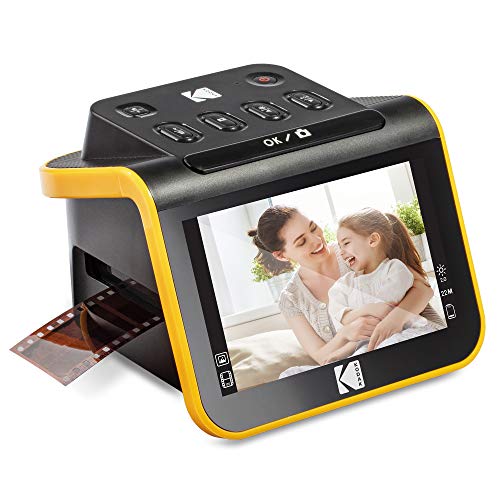
- 22MP capture with a 5-inch LCD
- Supports 135, 110, 126, and 50mm formats
- Saves scans directly to SD or SDHC cards
Best For: Simple home scanning across multiple film formats
Color-Calibration Upgrade
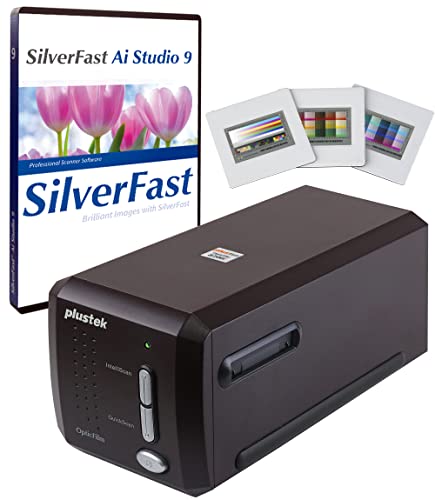
- 7200 dpi 35mm slide scanning
- Includes advanced IT8 calibration target
- SilverFast 9 Ai Studio with infrared correction
Best For: Calibrated, professional-style 35mm archiving on Mac
Batch-Scanning Workhorse
Pacific Image PowerSlide X Plus

- Batch scans up to 50 mounted slides
- 10,000 dpi true RGB CCD scanning
- Supports DNG and Mac OS X 10.13 or later
Best For: Large 35mm slide collections and efficient archiving
Best Standalone Pick
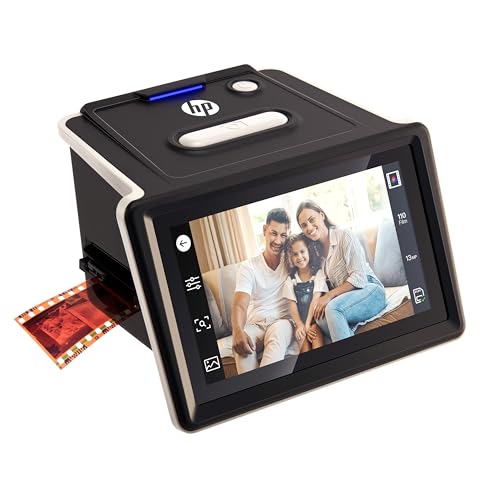
- Standalone scanning with a 5-inch touchscreen
- Supports 135, 126, and 110 film formats
- Quick-load tray for faster batch work
Best For: Mac users digitizing mixed film collections without a computer
Best High-Resolution Value

- 24MP JPEG output with fast scanning
- Large 5-inch display and HDMI viewing
- Supports multiple film and slide formats
Best For: Fast, computer-free scanning with flexible viewing options
Best Large-Screen Option

- Large 7-inch tiltable LCD display
- Quick-feeding tray for continuous scanning
- Supports 135, 110, and 126 film
Best For: Simple home archiving with large-screen preview and editing
Best with Extra Features

- Up to 24MP CMOS scanning
- 7-inch LCD with image adjustment
- Supports multiple film formats and includes an SD card
Best For: Computer-free scanning with a large preview display
Best Touchscreen Workflow

- 7-inch color touchscreen
- 13MP CMOS image capture
- USB and HDMI connectivity
Best For: Simple scanning, editing, and viewing without complicated software
Best Cordless Value
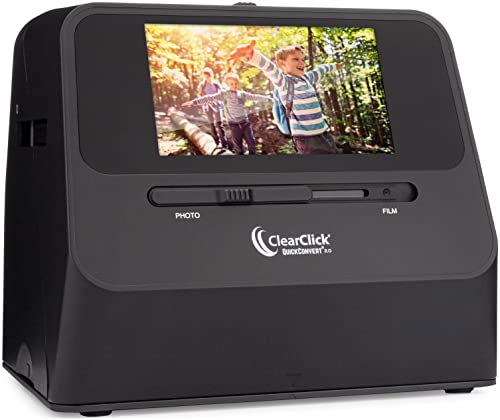
- Scans items in about 2–3 seconds
- Rechargeable battery for cordless use
- Supports photos plus 35mm, 110, and 126 film
Best For: Fast, portable digitizing of mixed photo and film collections
High-Resolution Choice – Plustek OpticFilm 8200i SE
For photographers seeking slide scanners for Mac, the Plustek OpticFilm 8200i SE is a dedicated 35mm option with 7200 dpi resolution, 48-bit output, and built-in infrared dust and scratch detection. It supports Mac OS 10.7 through 14.x and includes SilverFast SE Plus 9 for enhanced film processing.
Best For: Mac users digitizing 35mm negatives and mounted slides who want high resolution and automated defect removal.
Pros:
- 7200 dpi scanning for 35mm film and mounted slides
- Built-in infrared channel helps remove dust and scratches
- Includes SilverFast SE Plus 9 and Plustek QuickScan
- Supports 48-bit input and up to 3.6 dynamic range
Cons:
- Designed for 35mm film rather than multiple film formats
- Requires downloading the driver from Plustek
The 8200i SE is a strong fit when image detail and cleanup tools matter more than batch convenience. Its dedicated film design and Mac compatibility make it a practical choice for careful archival work.
Easy Viewing Pick – KODAK Slide N Scan Film Scanner
The KODAK Slide N Scan is a convenient option among slide scanners for Mac, especially for casual digitizing and family projects. Its 5-inch LCD lets you preview and edit images directly, while the scanner supports 135, 110, 126, and 50mm slides and saves files to an SD or SDHC card.
Best For: Beginners and families who want simple scanning, on-device previews, and support for several older film formats.
Pros:
- 22-megapixel capture with a large 5-inch LCD screen
- Supports 135, 110, 126, and 50mm slide formats
- Quick-feeding inserts simplify continuous loading
- Can save directly to SD or SDHC cards up to 32GB
Cons:
- SD card is not included
- Mac connection requires a Type-C USB-enabled computer
- Offers 24-bit color depth rather than the higher depth of some dedicated film scanners
This KODAK model emphasizes ease of use rather than advanced computer-based control. The built-in screen and broad format support make it appealing for straightforward home scanning and sharing.
Color-Calibration Upgrade – Plustek OpticFilm 8300i Ai
The Plustek OpticFilm 8300i Ai is a professional-oriented choice for slide scanners for Mac, combining 7200 dpi scanning with SilverFast 9 Ai Studio and an advanced IT8 calibration target. Its infrared correction, HDRi, Multi-Exposure, and NegaFix tools are designed to support more controlled film digitization.
Best For: Enthusiasts and professionals who need calibrated color workflows and advanced processing for 35mm slides.
Pros:
- Includes an ISO 12641-2 compliant advanced IT8 calibration target
- SilverFast 9 Ai Studio provides extensive image-processing tools
- Built-in infrared, HDRi, Multi-Exposure, and NegaFix features
- New-generation chip increases scan speed by 38% over the prior model
Cons:
- Focused on 35mm slides rather than a range of film sizes
- Advanced software and calibration features may be more than casual users need
The 8300i Ai is best considered when color accuracy and processing flexibility justify a more specialized workflow. Its included calibration target adds useful value for users building a consistent archive.
Batch-Scanning Workhorse – Pacific Image PowerSlide X Plus
For large collections, the Pacific Image PowerSlide X Plus stands out among slide scanners for Mac because it can automatically batch scan up to 50 mounted 35mm slides. It combines a 10,000 dpi true RGB linear-array CCD with 48-bit color and DNG support for users who want high-resolution files and raw processing flexibility.
Best For: Mac users digitizing large batches of mounted 35mm slides with minimal manual loading.
Pros:
- Automatically scans batches of up to 50 mounted slides
- 10,000 dpi scanning with a true RGB linear-array CCD
- Supports DNG format for preserving raw image data
- Compatible with Mac OS X 10.13 or later
Cons:
- Requires at least 4GB RAM and 50GB of available hard-disk space
- Damaged or damp slides may jam the machine
- At 4.65 kg, it is heavier than the other listed options
The PowerSlide X Plus is the productivity-focused option here. Its batch magazine can save substantial handling time, while the CCD sensor and DNG support give advanced users more control over final image processing.
Best Standalone Pick – HPFS500 Film & Slide Scanner
For shoppers comparing slide scanners for Mac, the HPFS500 offers a convenient standalone workflow, so you can digitize supported film and slides without keeping a computer connected. Its touchscreen and quick-load tray make it practical for organizing larger collections.
Best For: Mac users who want standalone scanning, touchscreen controls, and support for several common film formats.
Pros:
- Works with 135, 126, and 110 negatives and positive slides.
- 5-inch all-angle touchscreen supports previewing and editing.
- 13MP sensor with 22MP interpolation is designed to preserve image detail.
- Quick-load tray helps speed up repeated scans.
Cons:
- Images are stored on an SD card, which is not included in the supplied details.
- macOS 10.15 or later is listed as the minimum Mac requirement.
The HPFS500 is a strong fit when ease of use and computer-free digitization matter more than a traditional desktop-scanner setup. Its format flexibility and integrated display make it especially useful for mixed archives.
Best High-Resolution Value – Magnasonic FS71 Film Scanner
The Magnasonic FS71 is worth considering among slide scanners for Mac if you want quick, computer-free conversions and a large built-in display. It creates 24MP JPEG files and supports several film and slide formats, while HDMI adds another viewing option.
Best For: Users who want fast scanning, a large screen, and direct storage of high-resolution JPEG files.
Pros:
- Converts 35mm, 110, 126, and Super 8 negatives plus 135, 126, and 110 slides.
- Produces 24MP digital JPEG files.
- 5-inch LCD supports direct viewing, with HDMI output for a TV or monitor.
- Scans can be saved to an SD card with support up to 128GB.
Cons:
- HDMI cable and SD card are not included.
- The supplied minimum system requirements list Windows 7, not macOS.
With scanning in less than five seconds per image and on-device brightness and color adjustments, the FS71 emphasizes speed and simplicity. Mac buyers should note that its listed system requirements do not specify macOS support.
Best Large-Screen Option – KODAK Slide N Scan Max
The KODAK Slide N Scan Max stands out among slide scanners for Mac with its 7-inch tiltable LCD and quick-feeding tray. It saves scans directly to SD or SDHC cards and offers one-touch editing for a straightforward home digitization workflow.
Best For: Users who prioritize a large preview screen, simple editing, and convenient scanning of mixed-format film collections.
Pros:
- 7-inch tiltable LCD doubles as a digital picture frame.
- Quick-feeding tray supports continuous scanning without repositioning each frame.
- Handles 135mm, 110mm, and 126mm film.
- One-touch tools resize, convert, and adjust images.
Cons:
- SD/SDHC storage is limited to cards up to 32GB.
- The supplied minimum system requirements list Windows 7, not macOS.
- The compact display-focused design may be less suitable for users seeking a traditional computer-connected scanner.
The Slide N Scan Max is appealing for hands-on archiving, especially when you want to preview and edit images directly on the unit. Its broad format support and continuous-feed tray can make large family collections easier to process.
Best with Extra Features – BEONEGLOBAL ClearScan P7
For shoppers comparing slide scanners for Mac, the BEONEGLOBAL ClearScan P7 is a convenient standalone option: it scans to an SD card rather than requiring a computer during the scanning process. Its broad format support and large display make it practical for reviewing and digitizing varied film collections.
Best For: Users who want high-resolution, computer-free scanning with a large preview screen and included storage.
Pros:
- Captures film and slides at up to 24MP using a 1/2.3-inch CMOS sensor.
- Supports 35mm/135, 126, 110, Super 8, and 8mm formats.
- Provides a bright 7-inch LCD for previewing and adjusting images.
- Includes a branded SD card for immediate scanning.
Cons:
- Its standalone workflow saves scans to an SD card, so transferring files to a Mac is an additional step.
- The supplied details do not specify direct Mac software compatibility.
The P7 stands out for its resolution, format flexibility, and straightforward controls. It is a strong fit for Mac users who prefer to scan independently and transfer JPEGs afterward.
Best Touchscreen Workflow – HP FilmScan 7
For slide scanners for Mac, the HP FilmScan 7 offers an easy on-device workflow that minimizes reliance on computer software. Its touchscreen supports previewing and editing, while USB connectivity allows finished files to be transferred to a computer.
Best For: Beginners and families who want touchscreen controls, simple editing, and flexible display options.
Pros:
- Uses a 7-inch color touch LCD for previewing, editing, and showing photos.
- 13MP CMOS sensor handles color and black-and-white negatives.
- Supports 135, 126, and 110 formats with a quick-feed loading tray.
- Offers USB transfer and HDMI output for viewing on a TV.
Cons:
- Its listed 13MP sensor is lower resolution than some alternatives in this roundup.
- The supplied details do not specify direct Mac software support.
- The device is limited to the listed film formats.
The HP FilmScan 7 is appealing when ease of use matters more than maximum capture resolution. Touch controls, built-in editing, USB transfer, and HDMI output give it a versatile role in a home digitizing setup.
Best Cordless Value – ClearClick QuickConvert 2.0
Among slide scanners for Mac, the ClearClick QuickConvert 2.0 is designed for quick, standalone digitizing. It scans photos, slides, and several negative formats to JPEG on an SD card, making it useful when you want to process memories first and organize them on a Mac later.
Best For: Users digitizing mixed collections who value speed, portability, and a built-in rechargeable battery.
Pros:
- Scans a photo, slide, or negative in about 2–3 seconds.
- Works without a computer or drivers and saves JPEG files to an SD card.
- Built-in rechargeable battery supports cordless scanning.
- Handles 4×6 photos or smaller plus 35mm, 110, and 126 film.
Cons:
- Processes one item at a time and has no automatic feeder.
- Does not support 5×7 photos.
- The stated 22MP figure is interpolated; native capture is listed as 14MP.
The QuickConvert 2.0 prioritizes convenience and scanning speed over automated batch handling. Its battery-powered design and broad media support make it a practical choice for transferring a personal archive to a Mac via SD card.
How We Picked the Best Slide Scanners for Mac
We focused on scanners that support common slide and film formats, including 35mm mounted slides and, where available, 110, 126, Super 8, and 8mm film. We also considered optical resolution, color depth, infrared dust and scratch removal, scanning speed, batch capacity, preview controls, and the usefulness of bundled software.
Mac compatibility is more than having a USB connection. A good choice should work with modern macOS workflows through supported scanning software, standard image formats, or direct file transfer. Because compatibility can vary by macOS version, confirm the manufacturer’s current driver and software support before buying.
Quick Comparison
| Best For | Look For |
|---|---|
| Maximum detail | High optical resolution and 48-bit or true-color output |
| Dust and scratch cleanup | Integrated infrared correction, such as Digital ICE-style processing |
| Large slide archives | Automatic feeding or batch scanning |
| Easy home use | Built-in LCD, simple controls, and direct saving |
| Mixed film collections | Support for 35mm, 110, 126, and specialty formats |
Key Buying Factors for Slide Scanners for Mac
Resolution and Image Quality
Higher advertised dpi does not always mean better results, so prioritize optical resolution and sensor quality. For enlargements or archival work, choose a dedicated film scanner with strong detail and higher color depth. Basic slide viewers and multipurpose converters are often better suited to sharing and casual backups.
Software and MacOS Support
Check whether the scanner includes Mac-compatible software, supports your macOS release, and exports standard TIFF or JPEG files. Some dedicated models require a computer and proprietary software, while LCD-based scanners may save to a memory card or internal storage with less dependence on drivers.
Speed, Feeding, and Dust Removal
Manual holders are acceptable for a small collection but become tedious for hundreds of slides. Batch-capable models can save substantial time. Infrared dust and scratch removal is valuable for compatible color film, although it may not work with every film type, black-and-white negative, or scanning mode.
Connectivity and File Handling
USB-C is convenient for newer Macs, but check whether the cable, adapter, or hub you need is included. Also verify the scanner’s file naming, storage, and transfer process before committing to a large project.
Who Should Buy Which Slide Scanners for Mac?
Choose a high-resolution Plustek model if you want detailed archival scans, color correction tools, and a computer-based workflow. The PowerSlide option is better for users with many mounted 35mm slides who value automated batch scanning. KODAK, Magnasonic, HP, BEONEGLOBAL, and ClearClick models are more convenient for casual users who want a screen, broad format support, or straightforward standalone conversion.
Before ordering, count your slides, identify their formats, estimate how much enlargement you need, and confirm current macOS compatibility. Those four checks usually matter more than the highest number printed on the box.