Digitizing negatives, slides, and old family film is a practical way to preserve memories while making them easier to share, print, and back up. The right scanner can turn a box of aging film into accessible digital files without requiring a complicated computer-based workflow.
These 10 picks cover convenient all-in-one scanners, models with larger displays, and options that support several common formats. Use the guide below to compare resolution, compatibility, controls, and output features before choosing the best fit for your archive.
Best 10 Film Scanners for Digitizing Photos Picks for 2026
Best All-Around Choice
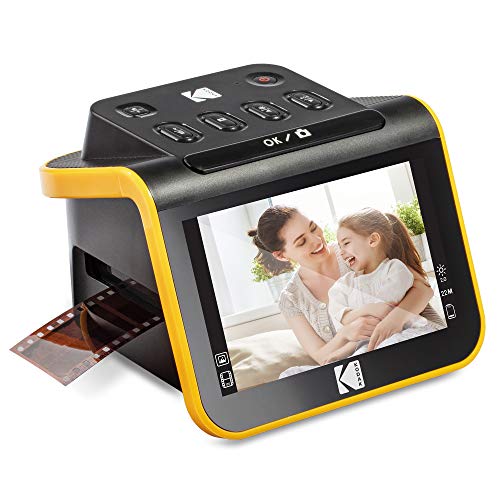
- 22MP scans with a 5-inch LCD
- Handles 135, 110, 126, and 50mm formats
- Saves directly to SD/SDHC cards
Best For: Mixed film collections and simple home archiving
Best Touchscreen Workflow
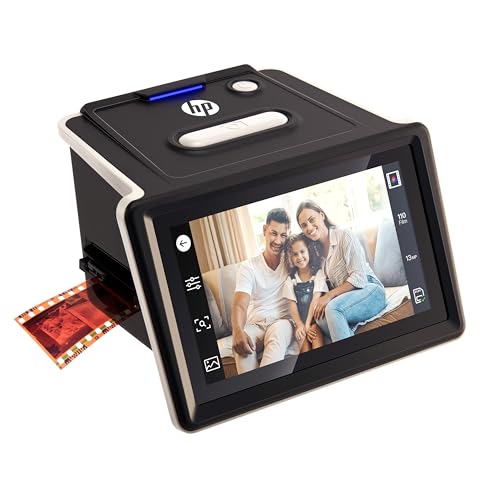
- Standalone scanning without a computer
- 5-inch all-angle touchscreen
- Supports 135, 126, and 110 formats
Best For: Touchscreen control and efficient mixed-format scanning
Best for High-Capacity Storage

- 24MP JPEG output
- Supports negatives, slides, and Super 8
- SD storage support up to 128GB
Best For: Large archives and broad format compatibility
Best Large-Screen Option

- Tiltable 7-inch LCD display
- Quick-feeding tray for continuous scanning
- Supports 135, 110, and 126 film
Best For: Large previews and simple family-archive scanning
Best Touchscreen Pick

- 7-inch touch screen for easy control
- Scans multiple film formats through Super 8
- 24MP output with 16GB SD card included
Best For: Beginners and families digitizing film without a computer
Best Connected Option

- 7-inch touch display with built-in editing
- 13MP sensor handles color and black-and-white film
- USB and HDMI support for transfers and viewing
Best For: Users wanting editing and TV or computer connectivity
Best Format Flexibility
KODAK SCANZA Film & Slide Scanner
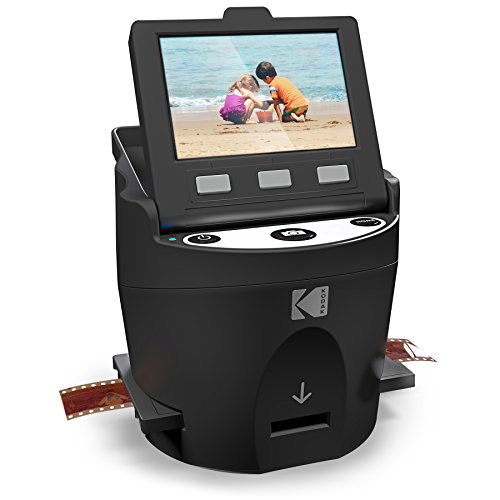
- Supports film from 35mm through 8mm
- 14MP/22MP JPEG scanning options
- Includes multiple adapters and cleaning brush
Best For: Digitizing mixed collections with Super 8 and 8mm film
Best Cord-Free Pick
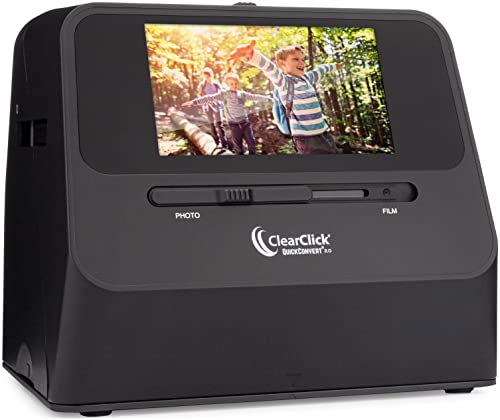
- Scans photos and film in about 2–3 seconds
- Rechargeable battery and 5-inch preview LCD
- Supports 4x6 photos plus 35mm, 110, and 126 film
Best For: Portable, straightforward home scanning
Best All-in-One Format Support

- Handles 135, 110, and 135 slides
- Scans photos and business cards
- Includes 8GB SD card and 5-inch LCD
Best For: Mixed family photo, film, and document collections
Best for HDMI Viewing

- Supports 135, 126, 110, and Super 8 photo film
- Offers 16MP or enhanced 22MP scans
- Includes HDMI output and SD storage up to 128GB
Best For: Home scanning with TV display capability
Best All-Around Choice – KODAK Slide N Scan 22MP
If you want film scanners for digitizing photos that are simple to use and flexible with older formats, the KODAK Slide N Scan is a practical option. It supports 135, 110, and 126 negatives plus 50mm, 135, 110, and 126 slides, with direct saving to an SD or SDHC card.
Best For: Families digitizing mixed collections who want a large built-in display and straightforward controls.
Pros:
- 22MP resolution with a 5-inch LCD for previewing and editing.
- Supports several negative and slide formats, including 110 and 126.
- Quick-feeding trays, one-touch editing, and direct SD/SDHC storage.
Cons:
- SD card is not included.
- Supports cards only up to 32GB.
The large screen, broad format support, and computer-free storage make this a well-rounded choice for occasional home archiving and sharing scans with family.
Best Touchscreen Workflow – HP FilmScan HPFS500
The HP FilmScan HPFS500 is among the film scanners for digitizing photos designed for a standalone workflow. Its 5-inch touchscreen lets you preview and edit scans without a computer, while support for 135, 126, and 110 film covers common mixed-format collections.
Best For: Users who prefer touchscreen controls and want to digitize slides and negatives without relying on a computer during scanning.
Pros:
- Standalone operation for scanning without a computer.
- 5-inch all-angle LCD touchscreen for previewing and editing.
- Quick-load tray helps streamline larger scanning sessions.
- Supports 135, 126, and 110 negatives and positive slides.
Cons:
- Uses a 13MP CMOS sensor with 22MP interpolation rather than a native 22MP sensor.
- Supplied details specify USB connectivity but do not list HDMI output.
With hands-on controls and efficient loading, the HPFS500 is a convenient fit for users prioritizing ease of use and a computer-free digitization process.
Best for High-Capacity Storage – Magnasonic FS71 24MP
For shoppers comparing film scanners for digitizing photos, the Magnasonic FS71 combines 24MP JPEG output with broad format support and fast scanning. It handles 35mm, 110, 126, and Super 8 negatives, along with 135, 126, and 110 slides, and saves files to an SD card.
Best For: Users who want high-resolution output, broad film compatibility, and expandable storage for a large photo archive.
Pros:
- 24MP output for digital JPEG files.
- Supports 35mm, 110, 126, and Super 8 negatives.
- Accepts SD cards up to 128GB.
- Adjusts brightness and RGB color directly on the scanner.
Cons:
- SD card is not included.
- HDMI cable is not included.
Its 128GB storage support and wide format coverage make the FS71 especially useful for extensive collections, while the built-in controls avoid the need for editing software during basic adjustments.
Best Large-Screen Option – KODAK Slide N Scan Max
The KODAK Slide N Scan Max stands out among film scanners for digitizing photos with its tiltable 7-inch LCD and quick-feeding tray. It supports 135, 110, and 126 film, saves scans directly to SD or SDHC cards, and includes one-touch adjustments for a less complicated workflow.
Best For: Users who want the largest viewing screen in this group for previewing, editing, and sharing scanned images.
Pros:
- Large 7-inch tiltable LCD doubles as a digital picture frame.
- Quick-feeding tray supports continuous scanning.
- Handles 135, 110, and 126 film formats.
- One-touch resizing, conversion, and image adjustments.
Cons:
- SD/SDHC storage is limited to cards up to 32GB.
- Supplied details list USB connectivity but do not mention HDMI output.
The Max is a strong choice when screen size and easy viewing matter most. Its straightforward controls and continuous loading also suit users working through a family archive.
Best Touchscreen Pick – ClearScan T7
For shoppers comparing film scanners for digitizing photos, the ClearScan T7 stands out for its large 7-inch touch screen and broad format support. It scans 35mm, 135, 126, 110, and Super 8 negatives and slides, saving JPEG files directly to the included 16GB SD card without requiring a computer.
Best For: Beginners, families, and anyone who wants a simple computer-free scanning setup.
Pros:
- Large touch screen simplifies previewing, adjustments, scanning, and saving.
- Supports several film formats, including Super 8.
- 24MP digital output and an included 16GB SD card.
- One-year manufacturer warranty.
Cons:
- Final image quality can vary with the age, exposure, and condition of the original film.
- USB is listed as the connection type, with no additional connectivity details provided.
The ClearScan T7 is a practical choice for home archiving, especially when ease of use matters more than a computer-based workflow. Its touch interface and included storage make it particularly approachable for first-time users.
Best Connected Option – HP FilmScan 7
Among film scanners for digitizing photos, the HP FilmScan 7 combines a 7-inch color touch display with USB and HDMI connectivity. It converts color and black-and-white negatives, as well as slides, while allowing users to preview, crop, and adjust images directly on the device.
Best For: Users who want on-device editing plus straightforward transfers to a computer or TV.
Pros:
- 7-inch touch LCD supports previewing, editing, and photo display.
- 13MP color CMOS sensor captures color and black-and-white film.
- Quick-feed tray and 50mm adapter support 135, 126, and 110 formats.
- USB and HDMI connections provide flexible transfer and viewing options.
Cons:
- The listed 13MP resolution is lower than some higher-resolution alternatives.
- Its stated format support does not include Super 8 or 8mm.
The HP FilmScan 7 is well suited to a mixed workflow: edit scans on its display, transfer them by USB, or show them on a TV through HDMI. Its gallery mode also lets the scanner serve as a digital picture frame.
Best Format Flexibility – KODAK SCANZA Film & Slide Scanner
The KODAK SCANZA is a flexible choice among film scanners for digitizing photos, supporting 35mm, 126, 110, Super 8, and 8mm negatives and slides. Its one-touch controls, multiple adapters, and built-in 3.5-inch display are designed for quickly converting film to JPEG files.
Best For: Film owners who need support for several common formats, including Super 8 and 8mm.
Pros:
- Supports 35mm, 126, 110, Super 8, and 8mm film.
- Offers 14MP/22MP scanning modes and JPEG output.
- Includes multiple inserts and adapters for different film types.
- Comes with USB, HDMI, AC, and video cables plus a cleaning brush.
Cons:
- SD card is not included.
- The 3.5-inch display is smaller than the 7-inch screens on the other listed models.
- Windows 7 is listed as the minimum system requirement for computer use.
The SCANZA makes sense for households with varied film collections and a preference for physical controls. The included adapters and cleaning brush add convenience, but buyers should plan to supply their own SD card.
Best Cord-Free Pick – ClearClick QuickConvert 2.0
For shoppers comparing film scanners for digitizing photos, the ClearClick QuickConvert 2.0 is a convenient option for quickly converting 4×6 photos, 35mm, 110, and 126 film without a computer. Its rechargeable battery, instant-preview screen, and SD-card storage make it practical for home projects.
Best For: People who want simple, portable scanning for small batches of photos, slides, and negatives.
Pros:
- Scans photos, slides, and negatives in about 2–3 seconds each.
- Works without a computer, drivers, or a constant power connection.
- Includes a 5-inch preview LCD and saves JPEG files to an SD card.
- Can scan photos without removing them from albums or mounts.
Cons:
- Handles one item at a time and has no autofeeder.
- Does not support 5×7 photos.
- The 22-megapixel output is interpolated; standard scanning is 14 megapixels.
This is a user-friendly choice for casual digitization, especially when portability and speed matter more than batch scanning or larger photo formats.
Best All-in-One Format Support – KEDOK Photo and Film Scanner
The KEDOK scanner is a versatile choice among film scanners for digitizing photos, combining support for several film sizes with photo and business-card scanning. It saves files to included 8GB SD storage or internal memory and provides a large screen for previewing and basic adjustments.
Best For: Families and home users digitizing mixed collections of film, photos, and documents.
Pros:
- Supports 135, 110, and 135 slides, along with 3R, 4R, and 5R photos.
- Includes an 8GB SD card and 128MB of internal memory.
- Offers one-touch adjustments for color, brightness, resolution, and orientation.
- Has a large 5-inch LCD and supports scanning business cards.
Cons:
- Its 22-megapixel output is a stated digital resolution rather than an optical-resolution specification.
- At 2.2 kg, it is relatively heavy for a compact home scanner.
- Scanning still requires placing items individually in the appropriate holder.
With its included accessories, broad media support, and three-year warranty, the KEDOK is suited to larger, varied home archives where flexibility is more important than minimal size.
Best for HDMI Viewing – PORTTA 22MP Film Scanner
The PORTTA film scanner adds HDMI output to the usual SD-card workflow, making it a useful option for film scanners for digitizing photos when you also want to view images on a television. It supports several film formats, offers 16MP or enhanced 22MP output, and includes on-device image adjustments.
Best For: Users who want to scan film at home and display results on a TV through HDMI.
Pros:
- Supports 135, 126, 110, and Super 8 photo film, including color and black-and-white media.
- Offers a choice of 16MP standard or 22MP enhanced output.
- Provides a 5-inch LCD for real-time preview and alignment.
- Stores images on SD cards up to 128GB and supports HDMI viewing.
Cons:
- Super 8 support is limited to photos.
- The notes do not specify included SD-card capacity or warranty coverage.
- It scans individual items rather than providing an autofeed workflow.
The PORTTA stands out for its HDMI connection and broad format compatibility, making it a practical fit for users who want both digital storage and convenient big-screen previews.
How We Picked These Film Scanners for Digitizing Photos
We focused on scanners designed for home users who want a straightforward way to digitize negatives, slides, and, in some cases, printed photographs. The selection considers supported film formats, advertised scan resolution, display size, ease of use, storage and transfer options, and useful extras such as HDMI output or computer-free operation. Because advertised megapixel counts do not guarantee professional image quality, we also weighed practical workflow features and format flexibility.
Quick Comparison
Most models in this roundup support 35mm film, while several also accept 110, 126, Super 8, or 8mm formats. Five-inch displays are common and provide a more comfortable preview than compact screens; seven-inch touchscreens are better suited to users who want larger on-device controls. Resolution claims range from around 13MP to 24MP, but exposure, color accuracy, dust on the film, and the condition of the original have a major effect on final results.
- Best for simple home use: Choose an all-in-one model with a built-in screen, one-touch controls, and memory-card or USB transfer.
- Best for larger previews: Consider a seven-inch touchscreen model if you will review many frames directly on the scanner.
- Best for varied collections: Look for support for 35mm, 110, 126, Super 8, or 8mm, depending on what is in your archive.
- Best for sharing on a television: An HDMI-equipped scanner can make reviewing images on a larger display more convenient.
Key Buying Factors for Film Scanners for Digitizing Photos
Film-Format Compatibility
Check the supported formats before comparing resolution. A scanner that handles only 35mm may be sufficient for standard negatives and slides, but collections containing Instamatic 126, 110 film, Super 8, or 8mm require a more versatile model. Confirm that the included holders match your originals.
Resolution and Image Expectations
Higher advertised megapixels can produce larger files, but they are not the same as optical resolution or professional scanning quality. For family archiving and casual sharing, convenience may matter more than maximum detail. Clean the film and scanner surface carefully to reduce dust and scratches in every scan.
Screen, Controls, and Workflow
A built-in LCD lets you crop, rotate, and preview images without connecting a computer. Larger touchscreens can be easier to navigate, while physical buttons may appeal to users who prefer simple controls. Also check whether files save to an SD card, internal storage, or a connected computer.
Connections and File Transfer
USB connectivity is useful for powering the scanner or moving files, but it does not always mean the device works like a conventional computer scanner. If you want to display scans on a television, prioritize HDMI output. Review included cables, adapters, and storage requirements before buying.
Who Should Buy Which Film Scanners for Digitizing Photos?
Choose a compact, easy-control scanner if you are digitizing a modest box of 35mm negatives and slides and want minimal setup. A model with a five-inch display is a good middle ground for most households, offering a clearer preview without taking up much space. If your archive includes multiple film sizes, prioritize format support over headline resolution.
Users with large collections may prefer a seven-inch touchscreen and fast, computer-free workflow, especially when reviewing hundreds of frames. HDMI is helpful for convenient viewing, while a higher advertised resolution may appeal to anyone who wants flexibility for cropping and printing. For irreplaceable originals or professional exhibition-quality results, consider having the most important images scanned by a dedicated photo lab rather than relying solely on a consumer device.