Digitizing a photo collection is easier when you choose a scanner that matches the size, condition, and format of your originals. The right model can preserve family memories while reducing repetitive cropping, feeding, and file-management work.
We compared 10 photo and document scanners for speed, image quality, format flexibility, ease of use, and practical home-archiving needs—from large print collections to slides, negatives, and occasional scanning.
Best 10 Photo Scanners for Archiving Picks for 2026
Best High-Speed Photo Archiver

- Scans up to one photo per second at 300 dpi
- Batch-scans up to 36 photos
- Supports duplex notes, restoration tools, and cloud backup
Best For: Large photo collections and mixed photo-document scanning
Best Film and Slide Converter
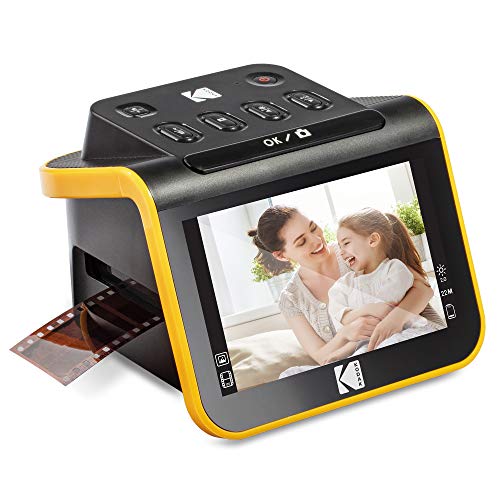
- Captures 135, 110, and 126 film formats
- Includes a 5-inch LCD viewing screen
- Saves scans directly to an SD card
Best For: Digitizing negatives and slides at home
Best Document Companion

- Uses a 50-sheet automatic document feeder
- Scans both sides with duplex capture
- Creates searchable and editable files with OCR
Best For: Archiving documents alongside family photos
Best Simple Photo Scanner

- Scans a 4 x 6 photo in about two seconds
- Supports photo sizes from 3 x 5 to 8 x 10 inches
- Includes 300 dpi and 600 dpi settings
Best For: Straightforward home scanning of printed photos
Best Compact All-Rounder

- Wi-Fi or USB connectivity
- Up to 30 ppm duplex scanning
- Handles photos, documents, and cards
Best For: Small workspaces and mixed photo-document archiving
Best Photo-Focused Archiving Bundle

- Scans photos from 1×1 to 8×10 inches
- 300 or 600 dpi resolution
- Includes cleaning kit and photo software
Best For: Organizing and preserving varied printed photo collections
Best High-Resolution Flatbed

- 4800×4800 dpi scanning
- Color restore and dust removal
- Slim USB Type-C flatbed design
Best For: Detailed individual photo scans and occasional documents
High-Resolution Pick

- 4800 dpi optical resolution
- One-click faded-photo restoration
- USB-powered flatbed design
Best For: Detailed home photo and document archiving
High-Volume Choice

- Up to 100 photos per minute
- Includes three photo carrier sheets
- Wi-Fi 6, USB-C, and touchscreen profiles
Best For: Fast batch photo archiving and file organization
Portable Budget Option

- Three-ounce USB-powered design
- Scans photos and mixed paper sizes
- HP WorkScan offers basic cleanup tools
Best For: Traveling users and occasional photo scanning
Best High-Speed Photo Archiver – Epson FastFoto FF-680W
For anyone comparing photo scanners for archiving, the Epson FastFoto FF-680W stands out for high-volume projects. It can scan photos at up to one photo per second at 300 dpi, batch up to 36 photos, and capture handwritten notes on the back with duplex scanning.
Best For: Families and archivists digitizing large collections of mixed-size photos and documents.
Pros:
- Fast scanning and a large 36-photo batch capacity
- Supports photos up to 8 x 10 inches, Polaroids, panoramas, and postcards
- Offers enhancement tools, 600 dpi TIFF archiving, and 1200 dpi enlargements
- Includes Wi-Fi, cloud backup options, and OCR document scanning
Cons:
- Its larger feature set may be more than occasional users need
- Designed for Windows 7 or later according to the supplied requirements
The FF-680W is a strong all-purpose choice when speed, batch handling, photo restoration, and document versatility matter more than a compact footprint.
Best Film and Slide Converter – KODAK Slide N Scan
The KODAK Slide N Scan is a specialized option among photo scanners for archiving, built for converting old negatives and slides rather than stacks of printed photos. Its 22MP capture, large LCD screen, and SD card storage make it easy to preview and save film scans without a complicated setup.
Best For: Users digitizing 135, 110, and 126 negatives or 50mm slides at home.
Pros:
- Supports multiple film and slide formats
- Includes a 5-inch LCD for previewing and editing scans
- Offers one-touch capture with color, brightness, size, and date adjustments
- Can save files directly to SD or SDHC cards up to 32GB
Cons:
- Designed for film and slides, not ordinary printed-photo batches
- SD card is not included
- Its supplied connection options are USB and HDMI rather than Wi-Fi
If your archive is mostly film-based, this compact scanner provides a straightforward way to preview, edit, and convert negatives and slides without relying on a flatbed workflow.
Best Document Companion – Epson WorkForce ES-400 II
The Epson WorkForce ES-400 II is primarily a document scanner, but it can complement photo scanners for archiving when your project also includes paperwork, captions, receipts, or family records. Its 50-sheet automatic document feeder, duplex scanning, OCR, and cloud-sharing tools are geared toward efficient document workflows.
Best For: Home offices and archives that need to digitize documents alongside photos.
Pros:
- 50-sheet ADF helps process document stacks efficiently
- Duplex scanning captures both sides in one pass
- OCR creates searchable PDFs and editable Word or Excel files
- Includes blank-page removal, auto-cropping, skew correction, and cloud sharing
Cons:
- It is designed for documents rather than dedicated photo restoration
- Uses a USB connection rather than wireless connectivity
- Supplied resolution is 300 dpi
Choose the ES-400 II when document organization is a major part of your archiving project. For high-volume printed photos or film, pair it with a purpose-built photo or film scanner.
Best Simple Photo Scanner – Plustek ePhoto Z300
The Plustek ePhoto Z300 is a straightforward choice for photo scanners for archiving when you want faster loading than a flatbed without the complexity of a high-end document system. It scans a 4 x 6 photo in about two seconds at 300 dpi and supports common print sizes through 8 x 10 inches.
Best For: Home users digitizing batches of standard printed photographs with simple USB operation.
Pros:
- Scans 4 x 6 photos in about two seconds at 300 dpi
- Supports 3 x 5, 4 x 6, 5 x 7, 8 x 10, letter, and A4 sizes
- Offers 300 dpi and 600 dpi scanning settings
- Includes image enhancement tools for faded photos
Cons:
- Photos are inserted one at a time
- Uses a USB connection and lists Windows 7 as the minimum requirement
- Does not offer the supplied duplex or wireless features of some alternatives
The ePhoto Z300 keeps the process focused and accessible. It is a practical fit for standard photo prints when you value a compact, uncomplicated workflow over batch feeding and advanced connectivity.
Best Compact All-Rounder – ScanSnap iX1300
For photo scanners for archiving that also handle everyday paperwork, the ScanSnap iX1300 offers a compact, flexible setup. It supports photos, documents, receipts, cards, and other media, with wireless or USB connectivity and automatic image corrections.
Best For: Small workspaces and households archiving photos alongside documents, receipts, and cards.
Pros:
- Compact design measures 11.7 inches wide and supports front or space-saving use.
- Scans up to 30 pages per minute duplex with automatic de-skew, color optimization, and blank-page removal.
- Works over Wi-Fi or USB and can send scans to computers, mobile devices, and cloud services.
- ScanSnap Home helps manage, edit, and organize scanned photos and documents.
Cons:
- Its 600 dpi resolution is lower than the Canon’s listed 4800 dpi resolution.
- The 20-sheet capacity and document-focused design may be less convenient for large batches of loose photos.
The iX1300 is a practical choice when archiving photos is only part of the job. Its connectivity, automatic corrections, and document-handling features make it especially versatile, while dedicated photo scanners may better suit a photo-only workflow.
Best Photo-Focused Archiving Bundle – AMBIR PS400Y2-AM
For photo scanners for archiving, the AMBIR PS400Y2-AM is built specifically around preserving and organizing printed memories. It offers 300 or 600 dpi scanning, automatic cropping and deskewing, photo-care accessories, and software for editing and cataloging images.
Best For: Families digitizing photos in multiple sizes who want included cleaning tools and organization software.
Pros:
- Supports photo sizes from 1×1 inches through 8×10 inches, plus panoramic images up to 12 inches.
- Offers 300 or 600 dpi options for detailed archival scans.
- Includes a blower, microfiber cloth, anti-static brush, and protective carrier sheet for delicate prints.
- Picture Studio software supports albums, tags, notes, restoration, enhancement, and editing.
Cons:
- USB is the only listed connection type, so wireless scanning is not available.
- It is designed for photos rather than general document and card scanning.
This is the most purpose-built option in the group for a photo-archiving project. Its size flexibility, protective kit, and cataloging tools make it a strong fit for organizing a varied collection of physical prints.
Best High-Resolution Flatbed – Canon CanoScan LiDE 400
Canon CanoScan LiDE 400 Slim Scanner, 7.7" x 14.5" x 0.4", Document & Photo Scanner, Black
Check Price On AmazonFor photo scanners for archiving where high listed resolution matters, the Canon CanoScan LiDE 400 combines a slim flatbed design with 4800×4800 dpi scanning. It also includes color restoration, dust removal, auto scan mode, and PDF controls for mixed photo and document use.
Best For: Users who want high-resolution flatbed scans of individual photos and occasional documents.
Pros:
- 4800×4800 dpi resolution and 48-bit color depth support detailed image capture.
- Color restore and dust removal can improve the appearance of scanned photos.
- Scans in as fast as 8 seconds and uses one USB Type-C cable for power and data.
- EZ buttons and auto scan mode simplify routine scanning.
Cons:
- The single-sheet capacity means larger photo collections require hands-on loading.
- USB is the only listed connection type, with no Wi-Fi option.
- Its flatbed format is less suited to rapid batch scanning than an automatic document feeder.
The LiDE 400 is a compelling fit for careful, high-detail scanning of individual prints. Choose it when resolution and image enhancements take priority over wireless operation or automated batch throughput.
High-Resolution Pick – Epson Perfection V19 II
For photo scanners for archiving, the Epson Perfection V19 II is a practical flatbed choice when image detail matters. Its 4800 dpi optical resolution, removable high-rise lid, and Easy Photo Fix technology suit photos, artwork, books, and documents.
Best For: Home archivists who want detailed scans and simple one-touch operation.
Pros:
- 4800 dpi optical resolution for clear, detailed scans
- Easy Photo Fix can restore color to faded photos with one click
- Removable high-rise lid accommodates books and thicker materials
- Compact, lightweight, and USB-powered
Cons:
- Flatbed design requires manually placing each item
- USB connection only; no wireless scanning
- Designed for a standard sheet capacity of one
The V19 II is well suited to careful, small-batch photo archiving, especially when you want high optical resolution and straightforward controls rather than automated feeding.
High-Volume Choice – ScanSnap iX2500 Photo Edition
Among photo scanners for archiving, the ScanSnap iX2500 Photo Edition stands out for larger batches and streamlined organization. It combines a 100-photo-per-minute scanning rate, a 100-document or 36-photo feeder capacity, photo carrier sheets, and wireless or USB connectivity.
Best For: Users digitizing substantial photo collections who value batch scanning and automatic file organization.
Pros:
- Scans up to 100 photos per minute
- Includes three photo carrier sheets for delicate prints
- Wi-Fi 6 and USB-C support flexible connections
- Touchscreen profiles and automatic naming and sorting simplify workflows
Cons:
- 600 dpi resolution is lower than a dedicated high-resolution flatbed
- Larger and heavier than compact portable scanners
- Requires relatively recent operating systems and devices
The iX2500 is the strongest fit here for speed and organization. Its feeder and software features can reduce hands-on work when archiving many photos, while carrier sheets provide an option for delicate prints.
Portable Budget Option – HP HPPS100 Portable Scanner
For photo scanners for archiving on the move, the HP HPPS100 offers a lightweight sheetfed design with USB power and support for photos, receipts, cards, and documents. Its 1200 dpi capability and HP WorkScan software provide basic editing, cropping, cleanup, and file-saving tools.
Best For: Travelers and users handling occasional photos or mixed small documents in limited spaces.
Pros:
- Extremely light at 3 ounces and only 2 inches deep
- USB-powered for portable use
- 1200 dpi resolution supports photo and document scanning
- HP WorkScan includes auto-scan, size detection, cropping, and image cleanup
Cons:
- Single-sided sheetfed scanning is less suited to bound or delicate originals
- 300 dpi is the listed scanner resolution, which may limit fine-detail archiving
- No wireless connection; USB is required
The HPPS100 is best when portability and a tiny footprint outweigh advanced photo-archiving features. For irreplaceable or fragile prints, a flatbed or photo carrier workflow may be more appropriate.
How We Picked the Best Photo Scanners for Archiving
We focused on the features that matter when converting physical memories into dependable digital files: scanning speed, optical resolution, automatic cropping and deskewing, duplex capability, connectivity, supported media, and ease of handling. We also considered whether each scanner is better suited to loose prints, documents, film, or mixed collections.
A high advertised resolution does not automatically mean better results. For photo archiving, sensor quality, consistent color, software controls, and the condition of the original often matter just as much. Models with automatic feeding can save substantial time, while flatbed scanners are usually safer for delicate, unusually sized, or valuable photographs.
Quick Comparison
| Best For | Recommended Type | What to Look For |
|---|---|---|
| Large print collections | High-speed sheetfed scanner | Automatic feeding, batch scanning, reliable cropping |
| Precious or delicate photos | Flatbed scanner | Good optical resolution, gentle handling, color controls |
| Slides and negatives | Film scanner | Supported film sizes, backlighting, dust reduction |
| Photos and paperwork together | Duplex document scanner | Two-sided scanning, wireless or USB connectivity |
| Occasional or travel use | Compact portable scanner | Small footprint, simple software, USB power |
Key Buying Factors for Photo Scanners for Archiving
Scanner Type and Workflow
Sheetfed models are the most efficient for stacks of standard-size prints, but they require photos that are reasonably flat and sturdy. Flatbeds take longer per image but offer more flexibility and protection. Film scanners are necessary for slides and negatives because ordinary photo scanners cannot capture those originals correctly.
Resolution and Image Quality
For typical prints, 300 to 600 dpi is generally sufficient for sharing and reprinting at similar sizes. Higher optical resolution is useful when enlarging small originals, cropping tightly, or scanning film. Prefer true optical resolution over interpolated figures, and check whether the software supports color correction and dust removal.
Speed, Feeding, and Automation
If you have hundreds or thousands of photos, automatic feeding, batch processing, auto crop, and deskew can save more time than maximum resolution. Duplex scanning is mainly valuable for documents or photos with notes on the back, while a flatbed may be the better choice for irregular sizes.
Connectivity and File Management
USB is dependable and often simplest. Wi-Fi can make shared household scanning more convenient, especially when sending files to multiple computers or mobile devices. Before buying, confirm operating-system compatibility and choose a scanner that can create common formats such as JPEG, TIFF, and searchable PDF where needed.
Who Should Buy Which Photo Scanners for Archiving?
Choose a high-speed sheetfed model for a large box of standard prints and a flatbed for fragile, curled, oversized, or historically important photographs. A film scanner is the right fit for collections dominated by slides and negatives. If your archive includes receipts, letters, and paperwork, a duplex document scanner offers a more versatile workflow. For small jobs, limited desk space, or scanning away from a home office, a compact portable model may be the most practical option.
Whichever scanner you choose, create consistent filenames, keep multiple backups, and avoid relying on a single hard drive. A thoughtful workflow will protect your archive long after the initial scanning project is complete.