Large sewing projects demand more than a basic overlock machine. The right serger should handle long seams, thicker fabric, repeated use, and efficient thread changes without becoming difficult to control.
We compared 10 standout models across durability, workspace, threading systems, stitch flexibility, speed, and ease of use to help you choose a dependable machine for garments, quilts, home décor, and production-size projects.
Best 10 Sergers for Large Projects Picks for 2026
Heavy-Duty Pick
Brother ST4031HD Strong & Tough

- Metal frame with durable carbon-steel blade
- Sews up to 1,300 stitches per minute
- Wide extension table for bigger projects
Best For: Heavy-duty sewing and large projects
Easy-Threading Choice
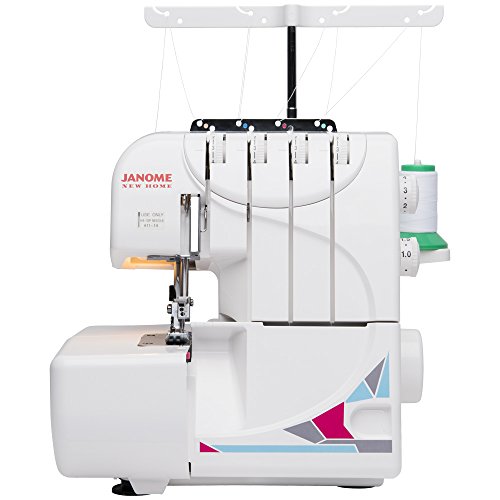
- Lay-in threading with color-coded guides
- Differential feed reduces stretching and puckering
- Supports 3- and 4-thread overlocking
Best For: Fabric control and straightforward setup
Proven Workhorse

- Metal frame for durable operation
- Handles multiple layers of denim
- Reaches 1,300 stitches per minute
Best For: Layered fabrics and practical everyday overlocking
Versatile Threading Pick

- Offers 2-, 3-, and 4-thread overlock options
- Includes workbook CD and instructional DVD
- Metal construction
Best For: Flexible thread configurations and guided learning
Best for Easy Setup

- Jet air threading simplifies looper setup
- Supports 2/3/4-thread stitch configurations
- Works with knits and stretchy materials
Best For: Large projects with frequent thread changes and stretch fabrics
High-Speed Workhorse

- Provides 2/3/4/5-thread stitch capability
- Sews at up to 1,300 stitches per minute
- Includes a broad accessory kit
Best For: Large, varied projects needing speed and stitch flexibility
Flexible-Fabric Specialist

- Free arm handles sleeves and cylindrical pieces
- Adjustable differential feed suits stretchy fabrics
- Presser-foot pressure adjusts for fabric weights
Best For: Garment projects with tubular areas and varied fabrics
Heavy-Duty Versatility

- 13 stitches with 4/3/2-thread capability
- Heavy-duty motor and metal interior frame
- Differential feed for varied fabrics
Best For: Mixed-fabric projects requiring versatile edge finishing
Air-Threading Convenience

- Air Threading Technology simplifies setup
- Cuts and finishes seams in one pass
- Includes gathering, blind stitch, and piping feet
Best For: Efficient seam finishing with specialty-foot options
Fast Heavy-Duty Finishing
SINGER HD0500S Heavy Duty Serger

- Sews up to 1,300 stitches per minute
- 2/3/4-thread operation with six stitch options
- Free arm and differential feed included
Best For: Fast large-batch work with thick or stretch fabrics
Heavy-Duty Pick – Brother ST4031HD Strong & Tough
For large projects that demand a sturdier build, the Brother ST4031HD is one of the more capable sergers for large projects. Its metal frame, carbon-steel blade, 1,300-stitches-per-minute speed, and included wide extension table are well suited to heavier materials and broader work areas.
Best For: Heavy-duty sewing and large projects requiring extra workspace.
Pros:
- Sturdy metal frame and extra-hard carbon-steel blade
- Fast sewing speed of up to 1,300 stitches per minute
- Large extension table supports bigger projects
- Color-coded guides and numbered loopers simplify threading
Cons:
- Only supports 3- and 4-thread serging
- Designed for 120-volt use in the US
The ST4031HD combines durability, speed, and useful included accessories, making it a strong choice when your projects involve multiple layers or substantial fabric pieces.
Easy-Threading Choice – Janome MOD-8933 Serger
Janome MOD-8933 Serger with Lay-In Threading, 3 and 4 Thread Convertible with Differential Feed
Check Price On AmazonThe Janome MOD-8933 is a practical option for sergers for large projects when fabric control and setup convenience matter. Its 3- and 4-thread capability, lay-in threading system, differential feed, and quick-change rolled hem support everyday overlocking tasks.
Best For: Sewers who want straightforward threading and better control over fabric movement.
Pros:
- Lay-in threading with color-coded guides
- Differential feed helps prevent stretching and puckering
- Convertible 3- and 4-thread operation
- Quick-change rolled hem and adjustable presser-foot pressure
Cons:
- No extension table is listed among the supplied components
- Supplied details list only screwdrivers as included components
Its differential-feed system makes the MOD-8933 especially useful when working across varied fabrics, while the accessible lower looper and lay-in threading help reduce setup friction.
Proven Workhorse – Brother 1034D Overlock Serger
The Brother 1034D is a compact workhorse for sergers for large projects, particularly when you need reliable performance on multiple layers. Its metal frame, 1,300-stitches-per-minute speed, included accessory feet, and support for denim and other heavy materials provide a practical feature set.
Best For: Budget-conscious sewists handling layered or heavier fabrics.
Pros:
- Metal frame and interior components
- Handles multiple layers of denim and other heavy materials
- Sews at up to 1,300 stitches per minute
- Includes standard, gathering, and blind-stitch feet
Cons:
- Smaller dimensions than some machines designed around larger work areas
- Limited to 3- or 4-thread operation
With a trim trap, threading aids, accessory feet, and included maintenance tools, the 1034D offers a well-rounded setup for productive overlocking without an especially large footprint.
Versatile Threading Pick – Juki Pearl Line MO-654DE
The Juki Pearl Line MO-654DE offers 2-, 3-, and 4-thread overlock options, giving large-project sewists more stitch-format flexibility. It also includes an electronic workbook CD and instructional DVD, which can be useful when learning the machine’s available functions.
Best For: Sewers who prioritize flexible thread configurations and included learning materials.
Pros:
- Supports 2-, 3-, and 4-thread overlock sewing
- Includes an electronic workbook CD
- Includes an instructional DVD video
- Metal construction
Cons:
- Supplied notes do not list an extension table or accessory feet
- Specific sewing speed and threading features are not provided
The MO-654DE stands out for its broader thread-range options and learning resources, making it a flexible choice when your large projects call for different overlock configurations.
Best for Easy Setup – Brother AIR1800 Air Serger
For sewists tackling large projects with frequent thread changes, the Brother AIR1800 makes setup especially straightforward. Its jet air threading system, color-coded guides, and support for two-, three-, and four-thread configurations make it a practical choice among sergers for large projects.
Best For: Large garment and stretch-fabric projects where quick threading and bright work-area lighting are useful.
Pros:
- Jet air threading sends thread through the looper tubes at the press of a button.
- Supports flatlock, overlock, and rolled hem stitches.
- Handles fine knits and stretchy materials, with an LED-lit work area.
Cons:
- Included as a machine-only package, so accessories may be limited.
- Designed for US 120-volt use only.
The AIR1800 is a strong fit when convenience is a priority, particularly for projects involving knits, dark fabrics, or repeated color changes. Its 21.5-pound build also gives it a substantial footprint for a dedicated work area.
High-Speed Workhorse – SINGER Professional 14T968DC
The SINGER Professional 5 14T968DC is built for sewists who want broad stitch flexibility and speed when handling substantial sewing workloads. Its 2-3-4-5 stitch capability and 1,300-stitches-per-minute maximum make it a compelling option among sergers for large projects.
Best For: Large garment and home décor projects requiring multiple stitch types, fast sewing, and a comprehensive accessory kit.
Pros:
- Offers 2-, 3-, 4-, and 5-thread stitch capability, including cover stitches.
- Reaches speeds of up to 1,300 stitches per minute.
- Includes accessories such as an extra knife, needles, tweezers, and a soft dust cover.
- Features a self-adjusting tension system and an easy threading diagram.
Cons:
- Its broad stitch range may mean more setup decisions between projects.
- The supplied notes do not specify differential-feed or free-arm functionality.
With its metal frame, high speed, and flexible stitch selection, this SINGER is suited to users who want one machine for varied project types. The included tools and 25-year limited warranty add practical support for long-term use.
Flexible-Fabric Specialist – JUKI MO-80CB Serger
The JUKI MO-80CB is a versatile choice for large projects that include sleeves, pant hems, cylindrical pieces, or fabrics with different weights. Its free arm, adjustable differential feed, cutting width, and presser-foot pressure make it especially adaptable among sergers for large projects.
Best For: Garment projects involving tubular areas, knits, georgette, and lightweight through heavyweight fabrics.
Pros:
- Converts to free-arm sewing for sleeves, pant hems, and cylindrical pieces.
- Adjustable differential feed helps finish stretchy fabrics such as knits and georgette.
- Adjustable cutting width and presser-foot pressure support varied finishing needs.
- Lower-looper threading is simplified with a lever-operated threader.
Cons:
- Its supplied notes do not list a maximum sewing speed.
- The 14-pound weight may provide less heft than heavier sergers during demanding work.
The MO-80CB stands out for control rather than a long list of included accessories. It is a practical choice when a project requires maneuverability around garment openings and careful adjustment for different fabric weights.
Heavy-Duty Versatility – SINGER HD0460 Next Evolution
For sergers for large projects, the SINGER HD0460 combines a heavy-duty motor, 4/3/2-thread capability, and 13 built-in stitches. Its strong cutting system and differential feed make it a practical choice for handling varied fabrics and substantial sewing workloads.
Best For: Large projects involving mixed fabric weights, stretch materials, rolled hems, and frequent edge finishing.
Pros:
- 13 built-in stitches support serging, flatlock, rolled hem, trimming, and overcasting.
- Heavy-duty motor and full metal interior frame provide stable support for thicker layers.
- Differential feed helps reduce stretching on knits and puckering on delicate fabrics.
- LED-lit threading path, waste tray, and included maintenance accessories support easier ongoing use.
Cons:
- Its 17.2-pound weight may make frequent repositioning less convenient.
- The included soft dust cover is less protective than a hard case for long-term storage.
The HD0460 stands out when a large project queue includes everything from lightweight fabric to denim-like or otherwise thick layers. Its stitch range and adjustable feed offer useful flexibility without requiring separate machines for common finishing techniques.
Air-Threading Convenience – Brother Airflow 3000
For sergers for large projects, the Brother Airflow 3000 focuses on efficient seam finishing and simplified setup. Air Threading Technology, one-pass cutting and finishing, and a brightly lit work area make it suited to extended sewing sessions.
Best For: Sewists who prioritize quick threading, clean one-pass seam finishing, and specialty-foot flexibility.
Pros:
- Air Threading Technology is designed to simplify setup.
- Cuts and finishes seams in one pass for efficient workflow on larger projects.
- Includes gathering, blind stitch, and piping feet for added technique options.
- Brightly lit work area supports visibility while sewing challenging materials.
Cons:
- The supplied notes do not specify stitch count or thread configurations.
- At 10.3 kg, it may be less convenient to move regularly between workspaces.
The Airflow 3000 is a strong fit when setup time and workflow efficiency matter most. Its air-threading system and included specialty feet help support a broad range of finishing tasks, though buyers seeking detailed stitch specifications may need to confirm them separately.
Fast Heavy-Duty Finishing – SINGER HD0500S Heavy Duty Serger
For sergers for large projects, the SINGER HD0500S pairs speeds of up to 1,300 stitches per minute with a 20% higher-wattage motor. Its 2/3/4-thread options, free arm, and differential feed support both substantial fabric work and detailed circular seams.
Best For: Large home-decor, denim, canvas, stretch-fabric, and garment projects where speed and heavy-duty stability matter.
Pros:
- Up to 1,300 stitches per minute supports fast project completion.
- Heavy-duty metal frame and higher-wattage motor provide stability and piercing power.
- Six stitch options and 2/3/4-thread configurations cover seams, hems, and decorative edges.
- Free arm simplifies cuffs, sleeves, and circular seams, while differential feed helps limit puckering.
Cons:
- It offers six stitch options, fewer than the HD0460’s 13 built-in stitches.
- The supplied details do not mention an included hard protective case.
The HD0500S is a practical choice for productivity-focused sewists working through larger batches. Its speed, free arm, and metal construction make it especially appealing for projects that combine thick fabrics with garment details.
How We Picked the Best Sergers for Large Projects
We focused on features that matter when a machine must work through substantial fabric quantities or frequent sewing sessions. Our comparison considers frame construction, maximum sewing speed, available thread configurations, differential feed, workspace, threading convenience, included accessories, and the machine’s suitability for different experience levels.
We also separated genuinely useful capacity features from marketing claims. A large extension table can improve control, while air threading can reduce setup time; neither replaces reliable tension adjustment, accessible controls, or a sturdy build.
Quick Comparison
| What to Compare | Why It Matters |
|---|---|
| Thread options | Two-, three-, and four-thread capability affects seam strength, finishing choices, and decorative flexibility. |
| Differential feed | Helps prevent stretching or puckering on knits, lightweight fabrics, and curved seams. |
| Threading system | Lay-in, color-coded, or jet-air threading can make setup faster and less frustrating. |
| Workspace and frame | A stable base and larger working area improve control on bulky or lengthy projects. |
| Speed and control | Higher speed saves time, but adjustable control is equally important for corners and delicate sections. |
Key Buying Factors for Sergers for Large Projects
Build Quality and Workspace
Choose a stable machine that will not shift as you guide heavy fabric. A metal frame, durable internal components, or a broad extension table can be especially valuable for curtains, costumes, quilts, and multiple garment panels.
Threading and Maintenance
Frequent thread changes make threading design a major consideration. Air-threading models offer the quickest setup, while color-coded paths and lay-in systems can be easier to learn and maintain. Check that lint removal, needle access, and blade replacement are straightforward.
Fabric Control and Stitch Range
Differential feed is one of the most useful features for varied materials. Look for adjustable stitch length and width, a well-designed presser-foot system, and enough thread configurations for your projects. Four-thread overlock stitches generally provide a strong construction seam; three-thread options are useful for finishing edges and lighter work.
Speed, Noise, and Operator Control
A fast machine can shorten repetitive work, but a responsive foot control and smooth low-speed operation matter just as much. If you sew for long periods, consider vibration, noise, lighting, and how easily the controls can be reached.
Who Should Buy Which Sergers for Large Projects?
Choose a heavy-duty or reinforced model if you regularly sew dense fabrics, bulky layers, or long production runs. A model with a larger table is a sensible choice for home décor and broad fabric pieces. If setup time is your main frustration, an air-threading serger may justify its higher cost. Beginners may prefer clear threading guides, simple controls, and dependable three- or four-thread operation over a more complex feature set.
For mixed wardrobes and stretch fabrics, prioritize differential feed and flexible stitch settings. Experienced sewists who want specialized finishes should look for broader thread capability and compatible presser feet. Before buying, confirm the machine’s warranty, replacement blade and needle availability, compatible accessories, and whether its dimensions fit your sewing table.