The best sergers make fast, clean work of seam finishing, edge trimming, and stretchy fabrics. The right model can also reduce bulk, improve durability, and give homemade garments a more polished finish.
This roundup compares 10 sergers across beginner-friendly, heavy-duty, and feature-rich designs so you can match threading, stitch options, speed, and build quality to the way you sew.
Best 10 Sergers Picks for 2026
Best Value

- 3- or 4-thread operation
- 1,300 stitches per minute
- Includes three accessory feet
Best For: Everyday home sewing and heavier fabrics
Best for Easy Threading
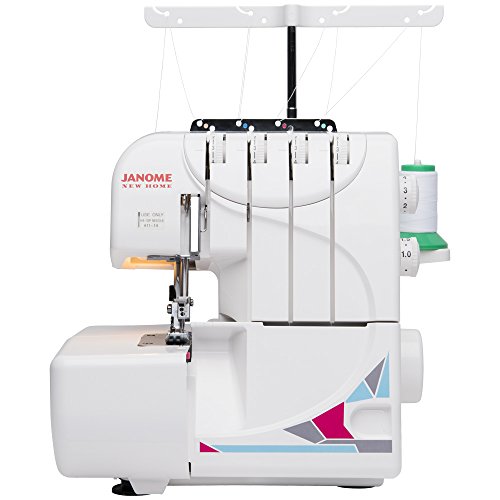
- Lay-in, color-coded threading
- Differential feed controls puckering
- Built-in rolled hem
Best For: Garment sewing with simple setup
Best Heavy-Duty Pick

- Sturdy metal frame
- Extra-hard carbon-steel blade
- Includes large extension table
Best For: Heavy fabrics and larger sewing projects
Best Threading Features

- Automatic lower-looper threader
- Adjustable differential feed
- Built-in rolled hem
Best For: Convenient setup and adjustable overlocking
Professional 5-Thread Pick

- 2- to 5-thread stitch capability
- Self-adjusting tension system
- 1,300 stitches per minute
Best For: Experienced sewists seeking maximum stitch versatility
Beginner-Friendly Value Pick

- 3- and 4-thread overlock capability
- Color-coded threading and re-thread guide
- Differential feed with LED light
Best For: Beginners handling everyday garments and mixed fabrics
Heavy-Duty Everyday Pick

- 13 stitches with 2- to 4-thread capability
- Heavy-duty motor and metal frame
- Differential feed and large cutting blade
Best For: Sewists working across knits, delicate fabrics, and thicker layers
Best Simple Pick

- Higher-wattage motor for added piercing power
- Six stitch options with 2-, 3-, and 4-thread capability
- LED threading, metal frame, and free arm
Best For: Heavier fabrics and demanding home sewing
Best Value – Brother 1034D Serger
The Brother 1034D is a practical choice for sewists who want versatile serging at a reasonable feature level. This 3- or 4-thread serger includes color-coded threading guides, a metal frame, and speeds up to 1,300 stitches per minute.
Best For: Home sewists seeking an easy-to-thread serger for everyday garments, denim, and other heavier materials.
Pros:
- Handles 3- or 4-thread overlock stitching and multiple layers of denim.
- Color-coded guides and a lower-looper threading system simplify setup.
- Includes standard, gathering, and blind-stitch feet, plus a trim trap.
- Metal frame and 1,300-stitches-per-minute speed support regular use.
Cons:
- Designed for 120-volt use in the US.
- Warranty coverage varies by component, with limited labor coverage.
The 1034D balances useful accessories, speed, and approachable threading features, making it a solid all-purpose option among entry-level sergers.
Best for Easy Threading – Janome MOD-8933 Serger
Janome MOD-8933 Serger with Lay-In Threading, 3 and 4 Thread Convertible with Differential Feed
Check Price On AmazonThe Janome MOD-8933 is one of the more approachable sergers for users who value straightforward setup. Its lay-in threading system, color-coded guides, differential feed, and convertible 3- or 4-thread operation cover common overlock tasks.
Best For: Sewists who want convenient threading, adjustable fabric handling, and a built-in rolled hem.
Pros:
- Lay-in threading system uses color-coded thread guides.
- Differential feed helps prevent stretching and puckering.
- Converts between 3- and 4-thread serging.
- Offers quick-change rolled hem capability and adjustable presser-foot pressure.
Cons:
- The supplied notes list only screwdrivers among the included components.
- No maximum sewing speed is specified in the supplied information.
With useful fabric-control adjustments and accessible threading features, the MOD-8933 is a sensible pick for garment makers who want flexibility without an overly complicated control layout.
Best Heavy-Duty Pick – Brother ST4031HD Serger
The Brother ST4031HD is built for sewists who need a sturdier machine for demanding projects. This 3- or 4-thread serger combines a metal frame, extra-hard carbon-steel blade, large extension table, and 1,300-stitches-per-minute speed.
Best For: Heavy-duty home sewing, larger projects, and users who frequently work with multiple fabric layers.
Pros:
- Metal frame and high-durability blade support heavier work.
- Produces a clean cut edge while sewing at up to 1,300 stitches per minute.
- Includes a wide extension table for larger projects.
- Comes with standard, blind-stitch, and gathering feet.
Cons:
- Its 17.6-pound weight makes it less convenient to move frequently.
- Designed for 120-volt use in the US.
The ST4031HD is a strong choice when durability and workspace matter more than portability, especially for projects involving thick or layered materials.
Best Threading Features – Juki MO-50E Serger
The Juki MO-50E focuses on practical controls that make serging adjustments easier. It offers lay-in tensions, an automatic lower-looper threader, adjustable differential feed, a calibrated knife, and a built-in rolled hem.
Best For: Sewists who prioritize convenient threading and adjustable stitch handling in a compact overlock machine.
Pros:
- Automatic lower-looper threader simplifies setup.
- Lay-in tensions make thread placement straightforward.
- Adjustable differential feed helps tailor fabric handling.
- Includes a built-in rolled hem and retractable upper knife.
Cons:
- The supplied notes do not specify included accessory feet.
- No maximum sewing speed is listed in the supplied information.
The MO-50E is a feature-focused option for users who want convenient threading and useful stitch adjustments without relying on a long list of bundled accessories.
Professional 5-Thread Pick – SINGER Professional 14T968DC
For sewists who want broad stitch flexibility, this SINGER serger supports 2-, 3-, 4-, and 5-thread configurations. Its self-adjusting tension system, fast operation, and included maintenance accessories make it a versatile choice for garments, hems, and larger sewing projects.
Best For: Experienced home sewists and makers who need multiple stitch configurations and high-speed performance.
Pros:
- Supports 2-, 3-, 4-, and 5-thread stitching, including cover stitches and rolled hems.
- Self-adjusting tension helps maintain balanced stitches across fabrics and stitch styles.
- Runs at up to 1,300 stitches per minute and includes a broad accessory kit.
- Metal frame and 25-year limited warranty add useful long-term support.
Cons:
- Its wider stitch capability may be more than beginners need.
- At 18.6 pounds, it is less convenient to move than a lighter machine.
The 14T968DC is a strong all-around option when stitch variety matters most. Its automatic tension and threading diagram simplify setup, while the high speed suits users tackling frequent or larger projects.
Beginner-Friendly Value Pick – 2026 3/4-Thread Serger
This 3/4-thread serger focuses on approachable setup and practical everyday performance. Color-coded threading guides, a re-threading guide, LED lighting, and differential feed make it a useful option for home sewists working with garments, knits, denim, and other fabrics.
Best For: Beginners and home users who want guided threading, essential overlock stitches, and adaptable fabric handling.
Pros:
- Supports 3- and 4-thread overlocking, including rolled hems and tight overlocking.
- Includes re-threading instructions and color-coded thread paths.
- Differential feed helps reduce puckering on lightweight fabrics and stretching on knits.
- Offers 12 stitch patterns, LED lighting, and operation up to 1,250 stitches per minute.
Cons:
- It does not offer the 2- or 5-thread configurations found on some more versatile sergers.
- The supplied notes recommend using high-quality thread to reduce breakage and skipped stitches.
With a sturdy metal body and beginner-oriented threading support, this machine balances core serger functions with ease of use. It is especially practical for users who want differential-feed control without a more complex stitch range.
Heavy-Duty Everyday Pick – SINGER HD0420 Next Evolution
The SINGER HD0420 is a practical heavy-duty serger for users who need dependable fabric handling across lightweight, stretch, and thicker materials. Its 4/3/2-thread capability, large cutting blade, differential feed, and metal frame support both routine finishing and more demanding projects.
Best For: Home sewists who regularly work with knits, delicate fabrics, heavier layers, and everyday garment projects.
Pros:
- Provides 13 stitches with 4-, 3-, and 2-thread capability.
- Heavy-duty motor and metal frame offer stable support and strong piercing power.
- Differential feed helps limit stretching on knits and puckering on delicate fabrics.
- Includes a large cutting blade, spare lower-cutter blade, needles, and maintenance tools.
Cons:
- The supplied notes do not specify a maximum stitching speed.
- Its 11.3-by-10.9-by-12.2-inch footprint may require dedicated storage space.
This model suits sewists who prioritize sturdy construction and controlled fabric feeding over an especially broad stitch range. The large blade and heavy-duty motor are useful advantages when projects involve thicker layers or frequent trimming.
Versatile Pick – SINGER S14-78 Serger
The SINGER S14-78 is a flexible choice for sewing garments, home décor, and finishing details. Its 2-, 3-, and 4-thread capability, differential feed, free arm, and rolled-hem options make it a practical addition to a serger setup.
Best For: Sewists who want versatile stitch configurations and convenient finishing features for knits, lightweight fabrics, cuffs, sleeves, and narrow hems.
Pros:
- Supports 2-, 3-, and 4-thread stitching for seams, edges, and decorative finishes.
- Differential feed helps reduce puckering on lightweight fabrics and stretching on knits.
- Free arm simplifies sewing cuffs and sleeves, while rolled and narrow hems add finishing flexibility.
- Includes a 2-thread converter, needles, tweezers, screwdriver, Allen key, foot control, and dust cover.
Cons:
- Threading and stitch adjustments may require learning the machine’s color-coded guides and settings.
- Its 13.9-pound construction is less convenient for frequent portability than a lighter model.
With a 1,300-stitches-per-minute speed and a useful mix of garment-focused features, the S14-78 offers broad everyday capability. It is especially appealing if free-arm access and rolled hems matter as much as basic overlock stitching.
Best Simple Pick – SINGER HD0500S Serger
The SINGER HD0500S is a heavy-duty serger designed for stable, fast sewing across projects ranging from denim and canvas to sheers. A metal frame, higher-wattage motor, LED-assisted threading, and six stitch options make it a strong option for demanding home sewing.
Best For: Sewists who prioritize piercing power, frame stability, quick setup, and reliable handling of heavier fabrics alongside stretch and delicate materials.
Pros:
- 1,300 stitches per minute and a 20% higher-wattage motor provide added speed and piercing power.
- Offers 2-, 3-, and 4-thread configurations with six stitch options.
- Lower looper LED and Easy View Threading system improve visibility during setup.
- Metal frame, free arm, differential feed, and included spare knife support varied projects.
Cons:
- At 15.9 pounds, it is the heaviest of these three machines and less convenient to move.
- The heavy-duty feature set may be more than needed for occasional lightweight projects.
The HD0500S stands out when stability and fabric-handling power are priorities. Its free arm and differential feed keep it practical for cuffs, circular seams, knits, and sheers, while the included accessories and Creativate app add setup support.
Easy-Start Option – SINGER S0100 Serger
The SINGER S0100 is a straightforward high-speed serger for sewing seams, hems, and decorative edges. It arrives pre-threaded and combines color-coded threading, adjustable differential feed, and six built-in stitches to make setup and everyday use more approachable.
Best For: Beginners and practical home sewists who want quick setup, flexible thread options, and smooth results on knits, sheers, fleece, and other common fabrics.
Pros:
- Pre-threaded out of the box and includes a general-purpose foot, tweezers, needles, cone adapters, and screwdriver.
- Supports 2-, 3-, and 4-thread stitching with six built-in stitches.
- Color-coded threading guides and diagrams help simplify setup.
- Adjustable differential feed helps limit wavy seams on stretch fabrics and puckering on lightweight materials.
Cons:
- It does not list the HD0500S’s lower-looper LED or higher-wattage motor.
- Its 14-inch depth may require a dedicated workspace for comfortable operation and storage.
For shoppers comparing sergers with an emphasis on accessibility, the S0100 offers a useful balance of speed and essential controls. Its pre-threaded setup and color-coded guides are particularly helpful when reducing the initial learning curve.
How We Picked the Best Sergers
We focused on the features that have the greatest effect on real sewing projects: thread capability, differential feed, threading design, stitch versatility, speed, frame construction, included accessories, and ease of adjustment. We also considered whether a machine suits beginners, garment makers, quilters, costume projects, or users who expect frequent heavy-duty use.
Because specifications and included accessories can vary by retailer or production revision, confirm the current listing before buying. Pay particular attention to included presser feet, warranty coverage, instructional materials, and whether the machine supports the stitch configurations you use most.
Quick Comparison
| What to Compare | Why It Matters | Best For |
|---|---|---|
| 2-, 3-, or 4-thread capability | Determines stitch strength, flexibility, and finishing options | Everyone, especially garment makers |
| Differential feed | Helps prevent wavering or puckering on knits and lightweight fabrics | Stretch fabrics and apparel sewing |
| Metal frame and heavy-duty construction | Can improve stability during faster or longer sewing sessions | Frequent or demanding use |
| Lay-in threading or lower-looper assistance | Makes setup less frustrating and reduces rethreading time | Beginners and occasional users |
| Rolled-hem and specialty stitches | Expands decorative and edge-finishing possibilities | Advanced garment and craft projects |
Key Buying Factors for Sergers
Threading and Learning Curve
Threading is often the biggest barrier for new serger owners. Lay-in tension systems, color-coded guides, clear diagrams, and lower-looper threaders can make setup easier. A model with straightforward controls may be more useful than one with extra stitches you rarely use.
Thread Count and Stitch Selection
Three-thread stitches are useful for lightweight seam finishing, while four-thread configurations generally provide a stronger construction seam. Two-thread capability can be convenient for delicate finishing, but not every machine supports it. Check stitch charts before purchasing if you sew knits, rolled hems, flatlocking, or decorative edges.
Differential Feed, Speed, and Stability
Differential feed is particularly valuable for jersey, fleece, and other fabrics that stretch or ripple. Higher stitching speeds can save time, but stable construction, controllable foot-pedal response, and adjustable settings matter just as much. A sturdy frame can help reduce movement on the table.
Accessories and Maintenance
Look for included tweezers, needles, spare upper knives, cleaning tools, screwdriver, waste catcher, and specialty feet. Easy access to the knife, loopers, and lint-prone areas also simplifies maintenance. Regular cleaning, oiling where specified, and replacing dull needles help preserve stitch quality.
Who Should Buy Which Sergers?
Beginners: Choose a serger with clear threading instructions, accessible controls, differential feed, and a manageable stitch selection. Simplicity can shorten the learning curve.
Garment makers: Prioritize four-thread capability, differential feed, rolled-hem options, and consistent tension adjustment for woven and stretch fabrics.
Frequent or heavy-duty users: Look for a stable metal-frame design, durable internal construction, strong motor performance, and an accessory package suited to your workflow.
Experienced sewists: Consider models with broader stitch flexibility, faster operation, specialty feet, and more adjustment range. The best choice is the one whose controls and stitch combinations match your projects rather than simply offering the highest speed.