Preparing yarn for tufting is easier when loose skeins become compact, stable cakes that feed smoothly during a project. The right winder can reduce tangles, improve storage, and save time between color changes.
This roundup compares 10 manual and electric options, from compact everyday models to larger-capacity winders suited to heavier yarn and frequent tufting work.
Best 10 Yarn Winders for Tufting Picks for 2026
Heavy-Duty Pick
Stanwood 10-Ounce Metal Ball Winder

- 10-ounce capacity for fewer reloads
- Steel construction with table-stable design
- Makes convenient center-pull yarn balls
Best For: Workshop crafters winding larger quantities manually
Automatic Compact Pick
Etcokei M1 Electric Yarn Winder

- Automatic winding reduces hand fatigue
- Adjustable speed and dual-spring tension
- Compact body with up to 7-ounce capacity
Best For: Home crafters seeking convenient electric winding
Large-Capacity Manual Pick

- Handles up to 10–15 ounces
- Works with bulky and super-bulky yarns
- Sturdy clamp and metal-base construction
Best For: Manual winding of large or thick yarn cakes
Space-Saving Electric Pick

- Automatic operation with adjustable speed
- Dual-spring tension supports smooth winding
- Compact body with up to 7-ounce capacity
Best For: Portable, space-conscious home crafting
Compact Manual Pick
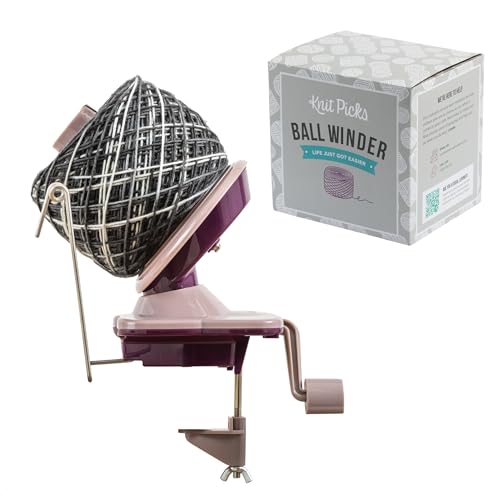
- Winds up to 100 grams
- Supports lace through bulky yarn
- Folds for compact storage
Best For: Small-batch winding and space-conscious crafters
High-Capacity Electric Pick
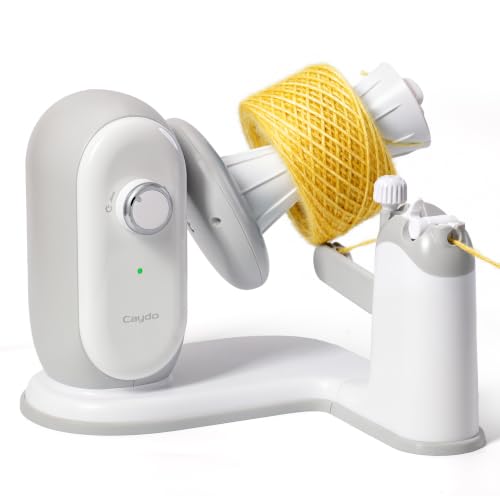
- Handles yarn cakes up to 16 ounces
- Uses hands-free electric winding
- No-clamp base fits flat desktops
Best For: Large projects and frequent winding
Simple Starter Pick

- Assembles in four steps
- Creates smooth center-pull yarn balls
- Handles yarn under 4 ounces
Best For: Beginners and occasional small-batch winding
Best Cordless Option
Rechargeable Electric Yarn Winder

- Up to 2 hours of operation per charge
- Stepless speed and dual-spring tension
- Large capacity in a compact design
Best For: Portable yarn winding away from outlets
Best Quiet Design

- Automatic center-pull yarn cakes
- Quiet operation with adjustable speed
- Compact and lightweight for storage
Best For: Quiet home crafting and workshops
Best Large Capacity

- Handles up to 15oz (425g) of yarn
- USB-C rechargeable cordless operation
- Stable anti-slip table-edge clamp
Best For: Large yarn cakes and varied yarn types
Heavy-Duty Pick – Stanwood 10-Ounce Metal Ball Winder
For yarn winders for tufting, the Stanwood is a sturdy hand-powered option designed for larger winding jobs. Its steel construction, center-pull cakes, and 10-ounce capacity make it practical for organizing thicker craft yarns without frequent reloading.
Best For: Crafters who want a durable, high-capacity manual winder for workshop use.
Pros:
- 10-ounce capacity can reduce the need for multiple winding sessions.
- Thick steel construction and powder coating help it stay stable during use.
- Creates center-pull yarn balls for convenient dispensing.
- Tool-less setup simplifies assembly.
Cons:
- Hand-powered operation requires ongoing manual effort.
- Its larger 15-inch length may need more storage space.
- The listed noise level is 80 dB.
Choose this model when stability and capacity matter more than portability or automatic operation. The reinforced nylon gear is intended to handle faster winding while keeping gear noise lower than a fully rigid design.
Automatic Compact Pick – Etcokei M1 Electric Yarn Winder
Among yarn winders for tufting, this compact electric model is a convenient choice when you want to reduce hand fatigue. It automatically forms yarn cakes, offers stepless speed control, and uses a dual-spring system to help maintain tension while winding.
Best For: Crafters who prioritize automatic winding, adjustable speed, and a compact footprint.
Pros:
- Automatic operation helps reduce fatigue from hand winding.
- Stepless speed control accommodates different yarn types and winding preferences.
- Dual springs provide tension intended to reduce vibration and knotting.
- Compact body is convenient for storage and travel.
Cons:
- Capacity is limited to approximately 7 ounces.
- Requires a power source rather than hand operation.
- Its ABS+POM construction may be less substantial than a steel winder.
This is a practical space-saving option for users who want faster, more consistent winding without operating a crank. Its adjustable speed and compact design make it particularly adaptable for home craft areas.
Large-Capacity Manual Pick – SPEENSUN 10–15-Ounce Winder
For yarn winders for tufting that can handle substantial amounts of material, the SPEENSUN offers a 10–15-ounce capacity and a durable manual design. It is built for different yarn thicknesses, including bulky and super-bulky varieties, while clamping to tables up to 1.8 inches thick.
Best For: Crafters winding large or thick yarn cakes who want a robust manual setup.
Pros:
- 10–15-ounce capacity helps avoid dividing yarn into several cakes.
- Suitable for worsted, bulky, and super-bulky yarns.
- Iron base, ABS gears, stainless steel handle, and table clamps support durability.
- Includes a detailed full-color instruction manual.
Cons:
- Manual cranking requires physical effort.
- Clamp fits tables up to a maximum thickness of 1.8 inches.
- Its 15.4-inch length and 13-inch height may require dedicated storage space.
The SPEENSUN is a strong fit when capacity is the deciding factor. Its broad yarn compatibility and sturdy components make it suited to heavier winding tasks, provided your work surface meets the clamp limitation.
Space-Saving Electric Pick – Caydo M1 Electric Yarn Winder
The Caydo M1 is one of the more convenient yarn winders for tufting if you want automatic operation in a small workspace. It creates compact yarn cakes, uses dual-spring tension, and provides stepless speed adjustment for different winding needs.
Best For: Crafters who need a lightweight electric winder for home use, storage, or travel.
Pros:
- Automatic winding saves hand effort and time.
- Stepless speed adjustment offers control for different yarn types.
- Dual-spring tension helps reduce yarn vibration and knotting.
- Compact 7-by-5.62-by-6.29-inch body is easy to store.
Cons:
- Capacity is limited to yarn loads up to 7 ounces.
- Electric operation requires access to power.
- Compact construction may be better suited to lighter-duty use than a heavy steel model.
Consider the Caydo when portability and convenience outweigh the need for maximum capacity. It delivers the same useful automatic and adjustable-speed features as a compact craft appliance while taking up relatively little workspace.
Compact Manual Pick – Knit Picks Yarn Ball Winder
If you need yarn winders for tufting that are compact and straightforward, the Knit Picks Yarn Ball Winder is a practical manual option. It winds up to 100 grams or 3.5 ounces of yarn into center-pull cakes and supports weights from lace and fingering through worsted and bulky.
Best For: Crafters who want a compact, manually operated winder for smaller yarn-preparation jobs.
Pros:
- Handles yarn up to 100 grams or 3.5 ounces.
- Works with multiple yarn weights, from lace to bulky.
- Removable spindle and foldable guide arm simplify storage.
- Attaches to surfaces up to 1-1/2 inches thick.
Cons:
- Manual winding requires repeated hand operation.
- Its stated capacity is smaller than the 16-ounce electric option in this roundup.
- Best results are recommended with a compatible yarn swift.
Its compact design and broad yarn-weight compatibility make it a sensible choice when storage space matters and your projects do not require oversized yarn cakes.
High-Capacity Electric Pick – Caydo A1 Pro Max Yarn Winder
For larger yarn-preparation tasks, the Caydo A1 Pro Max is one of the more capable yarn winders for tufting. Its electric operation reduces manual effort, while the no-clamp tabletop base and up-to-16-ounce capacity suit substantial skeins and batch work.
Best For: Frequent crafters, large projects, and users who prefer hands-free winding with higher capacity.
Pros:
- Winds yarn cakes up to 16 ounces.
- Electric operation reduces repetitive hand and wrist movement.
- No-clamp base works on flat desktops without table-thickness limits.
- Adjustable tension and a stabilizer guide arm support smooth, even winding.
Cons:
- At 3.24 pounds, it is heavier than the manual models listed here.
- Its larger 9.5-by-9-by-7.5-inch footprint may require more storage space.
- It is likely more equipment than occasional small-batch users need.
The A1 Pro Max stands out when capacity, speed, and reduced manual effort matter more than portability or a minimal setup.
Simple Starter Pick – INMAKER Yarn Winder
The INMAKER Yarn Winder is a compact manual choice among yarn winders for tufting, with a simple four-step assembly process. It creates flat-topped, flat-bottomed yarn balls with a smooth center pull and is designed for yarn weighing less than 4 ounces.
Best For: Beginners and occasional crafters who want a lightweight winder for smaller yarn quantities.
Pros:
- Assembles in four steps and can be ready in about one minute.
- Produces organized yarn balls with a center pull.
- Fits desks under 2 inches thick.
- ABS construction is described as sturdier and quieter than PP plastic.
Cons:
- Designed for yarn weighing less than 4 ounces.
- Requires a desk edge for installation and does not suit thicker desks.
- Manual operation is less convenient for extended or high-volume winding.
With its low weight, quick assembly, and small-yarn capacity, the INMAKER is a reasonable entry-level option for compact workspaces and occasional preparation.
Best Cordless Option – Rechargeable Electric Yarn Winder
If you want yarn winders for tufting that can work away from a wall outlet, this cordless electric model offers convenient automatic winding. Its rechargeable battery, adjustable speed, and dual-spring tension system are useful for organizing different yarn types with less manual effort.
Best For: Crafters who value portability, long battery life, and the flexibility to wind yarn in different locations.
Pros:
- 1800mAh battery provides up to 2 hours of continuous operation.
- Stepless speed control accommodates fine and coarse yarns.
- Dual-spring tension guide helps create smoother, more even winding.
- Large capacity and compact design support storage and travel.
Cons:
- Requires a 2.5–3 hour full charge.
- At 1.83 pounds, it may be heavier than a basic manual winder.
Choose this model if cordless operation is a priority and you expect to wind multiple yarn balls between charges. The auto-stop feature and large capacity add convenience for larger organizing projects.
Best Quiet Design – 10oz Automatic Yarn Spinner
For shoppers comparing yarn winders for tufting, this compact electric spinner focuses on simple automatic operation and quiet performance. It makes center-pull yarn cakes with adjustable speed while the dual-spring tension system helps maintain consistent winding.
Best For: Crafters who want a lightweight, space-saving winder for quieter home use or transport to workshops.
Pros:
- Automatically creates organized center-pull yarn cakes.
- Stepless speed adjustment suits different materials.
- Quiet operation is designed not to disturb the household.
- Compact, lightweight body is easy to store and carry.
Cons:
- Its stated capacity is 10 ounces, lower than the largest option in this roundup.
- The supplied notes do not mention cordless or rechargeable operation.
This is a sensible pick when quiet operation and portability matter more than maximum capacity. Its automatic winding and adjustable speed cover the core needs of many yarn organization tasks.
Best Large Capacity – 15oz USB-C Yarn Winder
If you need yarn winders for tufting that can handle larger batches, this 15-ounce electric model is built for fewer interruptions. USB-C recharging, stepless speed control, dual-spring tension, and a stable table-edge clamp make it a practical choice for varied yarn and regular craft use.
Best For: Crafters winding larger cakes from bulky, worsted, cotton, acrylic, wool, or finer yarns.
Pros:
- 15oz (425g) capacity can handle larger yarn cakes.
- USB-C rechargeable cordless design supports flexible placement.
- Stepless speed and dual-spring tension help accommodate different yarn types.
- Anti-slip silicone clamp pads improve stability and help protect the desk.
Cons:
- The supplied notes do not specify battery runtime or charging time.
- Its larger capacity may be more than needed for small winding jobs.
This model stands out when capacity and stability are the main buying factors. The upgraded clamp and broad yarn compatibility make it especially useful for larger organizing sessions.
How We Picked the Best Yarn Winders for Tufting
We focused on the features that matter most when winding yarn for tufting: capacity, winding consistency, tension control, ease of use, portability, and power options. The selection includes both hand-crank and electric designs so you can match the tool to your workflow, yarn volume, and available workspace.
Capacity claims are useful, but they are not universal. Actual performance depends on yarn thickness, fiber content, how tightly the yarn is wound, and the desired cake shape. We also considered practical details such as battery operation, USB charging, speed adjustment, stability, and whether a model is suitable for occasional or repeated use.
Quick Comparison
| Type | Best For | Main Advantage | Potential Trade-Off |
|---|---|---|---|
| Manual winder | Occasional winding and budget shoppers | Simple, quiet, and does not require charging | Requires hand-cranking and usually works more slowly |
| Compact electric | Small workspaces and regular use | Faster winding with less physical effort | May have lower capacity or shorter run time |
| Large electric | Frequent tufting and bulky yarn | Higher capacity and more efficient batch winding | Typically costs more and needs stable placement |
Key Buying Factors for Yarn Winders for Tufting
Capacity and Yarn Compatibility
Choose capacity based on your typical skein size rather than the largest advertised number. A 10-ounce model can suit many everyday projects, while 15- or 16-ounce options are more useful for larger skeins and fewer interruptions. Check that the winder accepts the yarn weights and fibers you use most often.
Tension and Cake Shape
Consistent tension helps create cakes that pull smoothly without collapsing or becoming overly tight. Adjustable tension, dual-spring systems, and a stable spindle are especially valuable when working with slippery, fuzzy, or mixed-fiber yarn.
Manual Versus Electric Operation
Manual winders are dependable and easy to store, but they require continuous cranking. Electric models are better for high-volume preparation and repetitive work. Look for variable speed control rather than only a single fast setting, since slower speeds can help prevent tangles and uneven winding.
Power, Stability, and Noise
USB-rechargeable and battery-powered models are convenient when outlets are limited. For a permanent craft station, corded operation may be simpler. Whichever type you choose, a broad base, clamp, or nonslip feet can help prevent movement while winding. Consider noise if you work in a shared room.
Who Should Buy Which Yarn Winders for Tufting?
Choose a manual model if you wind yarn occasionally, want the lowest-maintenance option, or prefer a quiet tool. Choose a compact electric winder if you make tufting projects regularly but have limited space. A large-capacity electric model is the better fit for frequent makers, multiple-color projects, and bulky skeins. If portability matters, prioritize rechargeable operation and a compact footprint; if consistency matters most, prioritize adjustable speed and reliable tension control.