Choosing among printmaking presses for detailed work means balancing pressure control, print-bed size, portability, and the type of blocks or plates you use. The right press can improve registration, ink transfer, and repeatability without overwhelming your workspace.
This roundup compares 10 options, including compact linocut presses, tabletop machines, slab-style tools, and more substantial etching presses, so beginners and experienced artists can find a practical fit.
Best 10 Printmaking Presses for Detailed Work Picks for 2026
Best Adjustable A4 Press

- Three adjustable pressure settings
- Supports blocks up to 25 mm thick
- Felt pad and steel frame for even printing
Best For: Beginners and home studios making A4-size relief prints
Best Compact Lino Press

- A5-size 5.875-by-8.25-inch format
- Uniform pressure with low effort
- Folds for compact storage
Best For: Lino artists with limited studio space
Best Heavy-Duty Roller Press
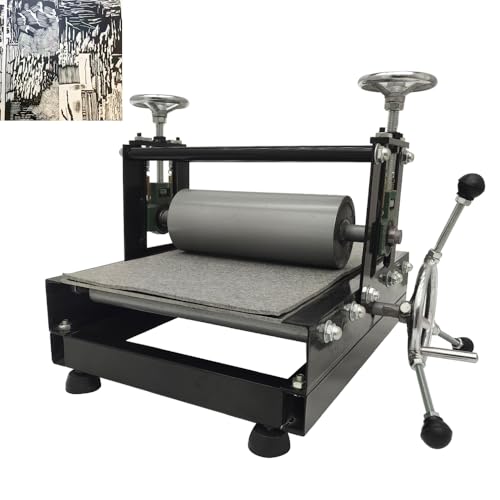
- 19.7-by-12.6-inch panel
- Adjustable roller height up to about 1.57 inches
- Large handwheel for manual pressure control
Best For: Larger relief, gravure, and embossed artwork
Best Versatile Etching Press

- Supports prints up to 9 by 15 inches
- Includes felt pad and base plate
- Works with several printmaking techniques
Best For: Beginners seeking a compact multi-technique press
Precision Hand Press
Glass Baren for Detailed Block Printing

- 1.7-pound body applies even pressure
- Polished glass glides with low friction
- Ergonomic 4-inch design for relief printing
Best For: Small, controlled linocut and woodcut printing
All-Metal Etching Press
Compact Press for Detailed Prints

- Supports etching, embossing, and block printing
- Durable all-metal 25-pound construction
- Approximately 11-by-10-inch printing area
Best For: Detailed monochrome and mixed-technique studio printing
Portable Block Press
Speedball Model B for Clear Prints

- Handles prints up to 6 by 8 inches
- Two adjustable height settings
- Portable 5.7-pound steel design
Best For: Small block-printing projects at home or school
Compact Precision Pick
Mini Adjustable Printmaking Press

- Stainless steel and brass construction
- Adjustable pressure for multiple plate types
- Portable 200 × 100mm printing bed
Best For: Small-format printmaking at home, in class, or at workshops
Portable Lever Choice
Lounsweer Adjustable Block Press

- Adjustable-height lever design
- Supports linocut, woodcut, and letterpress work
- Compact 6 × 8-inch print capacity
Best For: Portable home, school, and beginner printmaking
Handheld Relief Tool
Wooden 4-Inch Block Printing Press

- Even-pressure mesh printing pad
- Comfortable ergonomic wooden handle
- Steel-reinforced rim for stability
Best For: Small linocut and relief prints without a tabletop press
Best Adjustable A4 Press – Beech Wood Linocut Press
For artists comparing printmaking presses for detailed work, this manual A4 model combines a beech wood pressure plate and handle with three adjustable pressure settings. Its felt pad and stable steel frame are designed to support even ink transfer across blocks up to 25 mm thick.
Best For: Beginners, home studios, classrooms, and artists working with linocut, woodcut, letterpress, or rubber printing.
Pros:
- Three pressure settings accommodate A4 paper and blocks up to 25 mm thick.
- Felt pad helps protect carving blocks while distributing pressure.
- Compact tabletop format and versatile manual operation.
- Rust-resistant 304 stainless steel frame is built for frequent use.
Cons:
- Its A4 format may be limiting for larger prints.
- At 13 pounds, it is less portable than lighter tabletop presses.
This is a practical choice when adjustable pressure and broad beginner-friendly versatility matter more than oversized working capacity.
Best Compact Lino Press – Woodzilla A5 Press
For printmaking presses for detailed work in a smaller format, the Woodzilla Press offers a compact A5-sized working area with heavy-duty steel construction. It is designed to apply uniform pressure with relatively low effort and folds for storage between sessions.
Best For: Lino artists who want an A5 press for home use, workshops, or compact workspaces.
Pros:
- Precisely manufactured for consistent print results.
- Heavy-duty steel applies uniform pressure without undue strain.
- Mounts to a table or workbench for added stability.
- Foldable design saves storage space.
Cons:
- The 5.875-by-8.25-inch format is smaller than A4 models.
- Table mounting may be less convenient for users without a dedicated workbench.
Choose this press if compact storage, low-effort pressure, and an A5 working size align with your lino-printing workflow.
Best Heavy-Duty Roller Press – Portable Tabletop Slab Roller
Among printmaking presses for detailed work, this tabletop slab roller stands out for its larger panel, enlarged roller, and adjustable roller height. Manual operation and a large handwheel provide pressure control without electricity, while adjustable feet help stabilize the 48.9-pound frame.
Best For: Craftspeople and printmakers handling relief plates, gravure printing, embossed artworks, or batch processing.
Pros:
- Large 19.7-by-12.6-inch panel supports bigger workpieces.
- Roller height adjusts to about 1.57 inches for different thicknesses.
- Large handwheel and enlarged roller help provide even pressure.
- Adjustable anti-slip feet improve stability on a tabletop.
Cons:
- At 48.9 pounds, it is not especially easy to move.
- The machine occupies more space than compact hand presses.
This model is better suited to users who prioritize working area, pressure adjustment, and a substantial frame over lightweight portability.
Best Versatile Etching Press – Basic Steel Etching Machine
This compact etching press is a versatile option for printmaking presses for detailed work, supporting prints up to 9 by 15 inches. Its smooth roller, felt pad, and base plate are intended to distribute pressure evenly across etching, embossing, block printing, monotype, lithography, and relief projects.
Best For: Beginners, home studios, schools, and artists who want one compact press for several printmaking techniques.
Pros:
- Supports multiple techniques and prints up to 9 by 15 inches.
- 360-degree rotating L-shaped handle is designed for smoother operation.
- Included felt pad and base plate allow users to start without buying those accessories separately.
- Heavy-duty steel and a smooth roller support durable, even pressing.
Cons:
- Its compact size may limit larger projects.
- At 18.5 pounds, it is not the lightest option for frequent carrying.
Its broad technique compatibility and included accessories make it a sensible all-purpose choice for smaller studios and developing printmakers.
Precision Hand Press – Glass Baren for Detailed Block Printing
For printmaking presses for detailed work, the Wenses Glass Baren offers a compact hand-pressing option for linocuts, woodcuts, and other relief prints. Its 1.7-pound borosilicate-glass body and polished surface are designed to apply smooth, even pressure without requiring a tabletop press.
Best For: Artists who need controlled hand pressure for small relief-printing projects and detailed ink transfer.
Pros:
- Polished glass surface glides with low friction to help protect paper and cloth.
- 1.7-pound weight supports consistent pressure and ink coverage.
- Ergonomic handle is designed to reduce strain during longer sessions.
- Durable, heat-resistant borosilicate-glass construction.
Cons:
- It is a hand tool rather than a mechanical press.
- The 4-inch working surface is better suited to smaller print areas.
This baren is a practical choice when precision and portability matter more than press capacity. It can complement a larger press or provide a straightforward way to improve hand-applied pressure.
All-Metal Etching Press – Compact Press for Detailed Prints
Among printmaking presses for detailed work, this compact basic etching machine is built for artists who want a sturdy press for etching, embossing, block printing, and monochrome projects. Its all-metal construction and approximately 11-by-10-inch printing area provide a durable platform for varied techniques.
Best For: Printmakers seeking a compact, heavy-duty press for etching, embossing, block printing, and detailed monochrome work.
Pros:
- Supports etching, embossing, block printing, and other techniques.
- All-metal structure is designed for durability and long-term use.
- Provides an approximately 11-by-10-inch workspace for varied projects.
- Designed for sharp, detailed results through precise mechanisms.
Cons:
- At 25 pounds, it is substantially less portable than a small hand press.
- The supplied information describes it for monochrome printing, so color-registration needs are not addressed.
This machine makes the most sense for users who prioritize a solid metal build and a larger working area over easy transport. Its multi-technique design gives experienced artists room to explore beyond basic block printing.
Portable Block Press – Speedball Model B for Clear Prints
Speedball Block Printing Press - Adjustable Height Model B Steel Press For Printmaking
Check Price On AmazonThe Speedball Model B is a practical option among printmaking presses for detailed work when you need even pressure in a compact home, classroom, or travel setup. Its steel frame, adjustable height settings, and 6-by-8-inch reproduction capacity are suited to small block-printing projects.
Best For: Hobbyists, students, and home printmakers producing small block prints on hard or soft substrates.
Pros:
- Designed for reproducing prints up to 6 by 8 inches.
- Two adjustable height settings accommodate different block setups.
- Steel construction provides a sturdy pressing surface.
- Weighs about 5.7 pounds for easier transport and storage.
Cons:
- Its 6-by-8-inch capacity limits larger print projects.
- The manual lever design requires the user to operate each press.
- No warranty is listed in the supplied details.
Choose this press if portability and straightforward operation are priorities. It offers a more consistent alternative to pressing by hand while remaining compact enough for classroom, home-office, or mobile use.
Compact Precision Pick – Mini Adjustable Printmaking Press
For artists seeking printmaking presses for detailed work in a small studio, this compact manual press offers adjustable pressure and a stable metal build. Its 200 × 100mm bed is suited to small-format copperplate, woodcut, linoleum, and composite-plate projects.
Best For: Beginners, hobbyists, and small-format printmakers who need portable pressure control.
Pros:
- 304 stainless steel frame and brass adjustment knobs provide a durable, stable structure.
- Dual knobs allow pressure tuning for different plate thicknesses, with up to a 7mm gap.
- Compact 20 × 15 × 16cm design weighs about 2.5kg and requires no power.
- Supports several plate types and paper up to 150mm wide.
Cons:
- The 200 × 100mm bed limits it to relatively small-format work.
- Manual operation may be slower for larger print runs.
This is a practical choice when clean, controlled impressions matter more than a large working area. Its adjustable pressure and compact footprint make it particularly suitable for detailed practice, workshops, and home studios.
Portable Lever Choice – Lounsweer Adjustable Block Press
This Lounsweer press is a practical option among printmaking presses for detailed work when you want a compact lever-operated design. It accommodates prints up to 6 × 8 inches and is intended for linocut, woodcut, ink block printing, and letterpress projects.
Best For: Home and school users who want a portable press with adjustable height and straightforward lever operation.
Pros:
- Adjustable-height design helps accommodate different printing setups.
- Lever operation applies pressure smoothly without requiring powered equipment.
- Steel construction is designed to handle both hard and soft substrates.
- Compact, portable form weighs about 5.17 pounds.
Cons:
- The maximum print size is limited to 6 × 8 inches.
- A rubber or carpet mat is recommended to protect the work surface.
Choose this model if portability and simple operation are priorities. Its adjustable height and even-pressure lever make it versatile for classroom projects, home printmaking, and small letterpress work.
Handheld Relief Tool – Wooden 4-Inch Block Printing Press
For detailed relief work without a tabletop machine, this handheld tool offers a simple way to apply even pressure. The 4-inch printing surface, ergonomic wooden handle, reinforced rim, and mesh pad are designed for linocut, relief printing, and art prints on paper or fabric.
Best For: Beginners, classrooms, workshops, and printmakers who prefer a compact hand tool.
Pros:
- Mesh pad helps distribute pressure evenly and reduce smudging.
- Rounded wooden handle provides comfortable control during longer sessions.
- Steel-reinforced rim supports a firm printing surface.
- Lightweight 9.1-ounce design is easy to handle and store.
Cons:
- The 4-inch working surface is smaller than a dedicated press bed.
- Hand pressure may be less suitable for large or highly demanding runs.
This is the most portable option of the three and works well when convenience matters more than mechanical leverage. It is a useful companion for small relief prints, creative workshops, and hands-on practice.
How We Picked the Best Printmaking Presses for Detailed Work
We focused on features that matter when reproducing fine carved lines, small text, textures, and layered designs: adjustable pressure, stable construction, usable bed dimensions, even force distribution, and compatibility with common linoleum, wood, block, and etching projects. We also considered portability, setup requirements, operating style, and whether each press suits occasional crafting or repeated studio use.
Because “detailed work” can mean different things, this selection includes both manual hand-operated tools and presses with frames, plates, or adjustable mechanisms. A larger metal press may provide more consistent pressure, while a compact model can be easier to control for small-format work.
Quick Comparison
| Press type | Best suited to | Main advantage |
|---|---|---|
| Compact hand press | Small linocuts and block prints | Portable and simple to use |
| Wooden or tabletop press | Beginners and home studios | Accessible manual operation |
| Adjustable steel press | Repeat printing and varied materials | More controlled pressure |
| Etching-style press | Plates, thicker papers, and studio work | Greater versatility and stability |
| Baren-style tool | Very small prints or backup use | No large machine required |
Key Buying Factors for Printmaking Presses for Detailed Work
Pressure Control
Fine detail depends on consistent contact between the inked surface and paper. Adjustable pressure is especially useful when switching between thin paper, thicker stock, lino, wood, or plates. Avoid applying excessive force, which can emboss paper, flatten delicate textures, or make registration harder.
Bed Size and Working Area
Check the actual print-bed dimensions rather than relying only on the product name. A compact press may be ideal for postcards and small blocks but restrictive for larger designs. Leave enough room for the block, paper, registration guides, and any protective blankets or plates.
Stability and Construction
A rigid frame reduces movement and helps preserve fine lines across multiple impressions. Metal construction usually offers more stability, while wood can be lighter and friendlier for home use. Look for reinforced components, a flat base, and a mechanism that moves smoothly.
Portability and Setup
Artists with limited space may prefer a lightweight manual press that stores easily. Heavier presses are harder to move but often stay steadier during operation. Also check whether assembly, clamping, or a dedicated table is required.
Paper and Project Compatibility
Confirm that the press suits your media and process. Linocut and relief printing may need less equipment than etching, while plates and thicker materials can require a larger gap and more controlled pressure. A separate baren can be useful for quick proofs or locations where a press is unavailable.
Who Should Buy Which Printmaking Presses for Detailed Work?
Beginners and casual crafters: Choose a compact wooden, tabletop, or basic manual press with straightforward controls. These models are easier to learn and typically fit smaller projects.
Small-format linocut artists: Look for a press matched to your block dimensions, with enough pressure consistency for clean edges and fine carved marks.
Mobile artists and teachers: Prioritize low weight, simple setup, and a compact footprint. A hand press or baren-style tool may be more practical than a full studio machine.
Experienced printmakers: Consider an adjustable steel or etching-style press if you produce repeated editions, use multiple plate types, or need more precise control over pressure and registration.
Before buying, measure your available workspace and your largest intended block. The best press is not necessarily the largest; it is the one that provides stable, repeatable pressure for the materials and formats you use most.