Choosing the right marking pen can make silk sewing, quilting, embroidery, and dressmaking more precise without leaving distracting marks behind. The best fabric marking pens for silk offer controlled lines and a removal method suited to delicate fabric.
We compare 10 popular options, including heat-erasable, washable, air- and water-erasable, dual-purpose, and white marking pens, so you can match the tool to your project and workflow.
Best 10 Fabric Marking Pens for Silk Picks for 2026
Best Heat-Erasable Set
Madam Sew 8-Piece Fabric Marking Pens

- Four pens and four refills
- Fine 0.7 mm marking tips
- Heat-erasable ink for sewing and embroidery
Best For: Color-coded sewing projects and frequent crafters
Best Dual-Purpose Option
Dritz Blue and Purple Fabric Marking Pen

- Blue and purple marking tips
- Blue wipes away with a damp cloth
- Purple ink is air- and water-soluble
Best For: Short-term pattern, quilting, and embroidery markings
Best Air-Erasable Choice
Lange & König Air & Water Fabric Markers

- Marks disappear with air exposure
- Water-soluble for rinse removal
- Advertised coverage of up to 1,000 feet per pen
Best For: Sewing projects that avoid heat-based removal
Best Extra-Fine Value Set
8-Piece Heat-Erasable Fabric Pens

- Eight pens in multiple colors
- Extra-fine 0.5 mm tips
- Warm-iron removal with capped storage
Best For: Detailed, color-coded sewing and craft projects
Best Water-Removable Option
Mr. Pen Washable Fabric Markers

- Five blue fine-point pens
- Water-soluble, washable ink
- Clean guidelines for sewing
Best For: Temporary marks on washable fabric
Best Refill Value
JANYUN Heat-Erasable Fabric Pens

- Four pens and 12 refills
- Four ink colors included
- Fine lines erase with heat
Best For: Frequent sewing and craft projects
Best for Sewing Projects
OZXTYO Washable Fabric Markers
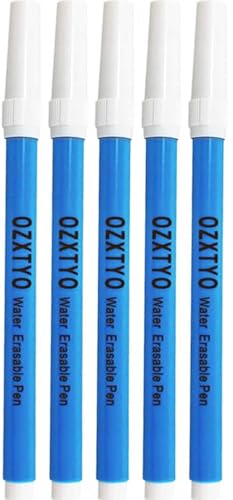
- Five blue fine-point markers
- Water-removable marks
- Useful for quilting and embroidery
Best For: Washable sewing and design-transfer projects
Refill-Ready Precision
White Heat-Erasable Fabric Pens

- Three pens with 27 total pieces
- Fine 0.7 mm writing point
- Heat-erasable white ink
Best For: Tailoring, quilting, and dressmaking with light-colored fabrics
Easy-Grip Sewing Set
Washable Heat-Erasable Fabric Marker

- Two pens plus 20 refills
- Fine 0.7 mm tip for detailed marks
- Designed to erase with an iron
Best For: Sewing, embroidery, quilting, and DIY alterations
Color-Coded Marking
Four-Color Heat-Erasable Fabric Pens

- Four ink colors for organized marking
- 0.7 mm extra-fine precision tips
- Includes eight refills
Best For: Color-coded sewing, quilting, embroidery, and dressmaking marks
Best Heat-Erasable Set – Madam Sew 8-Piece Fabric Marking Pens
For fabric marking pens for silk and other sewing projects, this Madam Sew set emphasizes fine, heat-erasable lines. Four pen colors and four refills make it useful for detailed quilting, embroidery, dressmaking, and pattern work.
Best For: Sewists who want multiple colors, fine 0.7 mm lines, and iron-removable markings.
Pros:
- Includes four pens plus four refills.
- Fine 0.7 mm tips support detailed marking.
- Marks disappear with heat and are designed to leave no ghost lines.
- Compact set is convenient for travel and repeated projects.
Cons:
- Ink may slightly bloat if left on fabric for an extended period.
- Not water-resistant, so it is not suited to projects requiring waterproof marks.
This is a well-equipped option when color coding and long-term value matter. Test the ink on a fabric scrap first, and remove markings with an iron as directed.
Best Dual-Purpose Option – Dritz Blue and Purple Fabric Marking Pen
The Dritz Dual Purpose pen gives fabric marking pens for silk shoppers two different removal methods in one product. Its blue Mark-B-Gone side wipes away with a damp cloth, while the purple side is air- and water-soluble.
Best For: Pattern transfers, embroidery guides, quilting designs, and alterations that need flexible marking and removal.
Pros:
- Dual-tip design combines blue and purple marking inks.
- Blue ink wipes away with a damp cloth.
- Purple ink can fade naturally or be removed with water.
- Fine tips support seam allowances and detailed craft marks.
Cons:
- Purple ink is intended for projects completed within 24 hours.
- Not recommended for dry-clean-only fabrics.
- The notes advise testing on the fabric before use.
This single pen is practical when you want to choose between a damp-cloth-removable mark and a fading mark. Its short working window for purple ink makes planning and testing especially important.
Best Air-Erasable Choice – Lange & König Air & Water Fabric Markers
These Lange & König markers are an alternative to chalk when choosing fabric marking pens for silk and general sewing. The marks can disappear in air or be removed with a quick rinse, giving you two cleanup options without heat.
Best For: Sewing and quilting projects where air disappearance or water removal is more convenient than ironing.
Pros:
- Air-erasable marks disappear on their own.
- Water-soluble ink can be removed with a fast rinse.
- Designed to glide smoothly across fabrics for visible lines.
- Each pen is advertised to cover up to 1,000 feet.
Cons:
- The supplied notes do not specify the number of pens or available colors.
- Water removal may be less convenient for projects that cannot be rinsed.
This set suits makers who prefer to avoid heat and want marks that can vanish naturally. Because fabric response can vary, test the air- and water-erasable ink on a scrap before marking the finished piece.
Best Extra-Fine Value Set – 8-Piece Heat-Erasable Fabric Pens
This eight-pen set is a straightforward choice for fabric marking pens for silk, quilting, embroidery, and other DIY work. Its 0.5 mm extra-fine tips are intended for crisp lines, while warm-iron removal makes cleanup simple.
Best For: Crafters who want an eight-color set with extra-fine tips for measuring, cutting, and detailed marking.
Pros:
- Includes eight fabric marking pens in multiple colors.
- Extra-fine 0.5 mm tips help create precise lines.
- Marks disappear when activated by a warm iron.
- Secure caps help prevent the pens from drying out during storage.
Cons:
- The pens are not water-resistant.
- No warranty is listed in the supplied details.
- Heat removal may be unsuitable when an iron cannot be used on the material.
This is a useful quantity-focused option for color coding and detailed craft work. Before using heat-erasable ink on silk or another delicate textile, test both the mark and the ironing method on a scrap.
Best Water-Removable Option – Mr. Pen Washable Fabric Markers
For sewists seeking fabric marking pens for silk and other washable materials, the Mr. Pen set offers fine blue lines for temporary guidelines. Its water-based ink is designed to wash away, making it useful for tailoring, cutting, sewing, and crafts.
Best For: Precise temporary marks on washable fabric during sewing and alterations.
Pros:
- Includes five blue fine-point pens for repeated projects.
- Water-soluble ink is removable with water.
- Designed to glide smoothly and create clean, precise guidelines.
Cons:
- Not water-resistant, so marks may not suit damp conditions.
- Marks should not be ironed before removal because heat may set the ink.
- Best suited to washable fabrics rather than dry-clean-only materials.
This is a straightforward choice when easy water removal matters most. Test first on silk or another delicate fabric, and remove the marks before applying heat.
Best Refill Value – JANYUN Heat-Erasable Fabric Pens
For shoppers comparing fabric marking pens for silk, the JANYUN set uses heat-erasable ink and includes extra refills. Its approximately 0.5 mm point is intended for clear marking across sewing, embroidery, garment work, and crafts.
Best For: Users who want multiple ink colors and a large supply of refills for ongoing projects.
Pros:
- Includes four pens plus 12 refills.
- Provides black, white, red, and blue ink options.
- Fine approximately 0.5 mm lines support measuring, cutting, and detailed designs.
- Heat-erasable marks are designed to disappear at temperatures up to 60°C.
Cons:
- Removal requires heat, which calls for care on silk and other heat-sensitive fabrics.
- Heat-erasable ink may not be appropriate where marks could be exposed to heat before finishing.
- The supplied notes do not specify that the ink is suitable for every fabric type.
The refill quantity and color range make this the most versatile set of the three. On silk, test an inconspicuous area and follow the fabric’s heat limitations before erasing marks.
Best for Sewing Projects – OZXTYO Washable Fabric Markers
The OZXTYO set is a practical pick among fabric marking pens for silk when you need visible blue guidelines for sewing, quilting, embroidery, or dressmaking. The water-soluble ink is intended for washable fabrics and produces fine lines for design transfer and construction.
Best For: Sewing enthusiasts marking washable projects with a five-pen blue set.
Pros:
- Includes five blue fabric markers with fine points.
- Marks are designed to wash away with water.
- Suitable for sewing, quilting, embroidery, crafts, and dressmaking.
- Long 6.5-inch pens provide a substantial writing format.
Cons:
- Not recommended for dry-clean-only fabrics.
- Marks should be removed before ironing because heat may make them difficult or impossible to erase.
- Only blue ink is included.
This set covers common sewing and design-transfer tasks at a basic level. Because silk care varies, test the marker and confirm that water cleaning is appropriate before marking the finished piece.
Refill-Ready Precision – White Heat-Erasable Fabric Pens
For sewists seeking fabric marking pens for silk and other light-colored materials, this set offers fine white lines designed to disappear with heat. The 0.7 mm tip supports detailed marking, while the included refills extend the life of the three pens.
Best For: Tailoring, quilting, dressmaking, and detailed marks on fabrics where white ink provides clear contrast.
Pros:
- Includes three pens and 27 total pen/refill pieces.
- Fine 0.7 mm stainless steel writing points create precise lines.
- Heat-erasable ink is designed to vanish quickly when touched with an iron.
- Capped refills are convenient to store and replace.
Cons:
- White ink may offer limited contrast on pale silk or other light fabrics.
- Not waterproof or water-resistant.
- Heat erasing requires an iron and may not suit projects where heat cannot be used.
This is a practical high-volume option if you prefer a white, refillable marker and regularly need precise temporary lines for sewing projects.
Easy-Grip Sewing Set – Washable Heat-Erasable Fabric Marker
These fabric marking pens for silk are a compact choice for sewing kits, combining two white heat-erasable pens with 20 replacement refills. Their fine tips are intended for accurate pattern, embroidery, and alteration marks, while the ink can be removed with ironing.
Best For: Tailoring, embroidery, quilting, and DIY alterations on cotton, polyester, denim, and most standard sewing fabrics.
Pros:
- Includes two pens and 20 replaceable refills.
- 0.7 mm fine tips support smooth, precise lines.
- Heat-sensitive ink is designed to erase by ironing without residue.
- Ergonomic design is intended for comfortable application.
Cons:
- Only white ink is included, which may be difficult to see on pale materials.
- Not waterproof or water-resistant.
- Heat removal may be unsuitable for fabrics or projects that cannot be ironed.
Choose this set if you want a smaller refill supply and an ergonomic marker for routine sewing and fabric-detailing work.
Color-Coded Marking – Four-Color Heat-Erasable Fabric Pens
For fabric marking pens for silk, this OZXTYO set stands out with four ink colors—white, blue, red, and black—rather than a single-color setup. Each pen has a 0.7 mm precision tip, and the marks are designed to disappear with heat for sewing, quilting, embroidery, and dressmaking.
Best For: Sewers who want multiple colors for organizing pattern marks across fabric, paper, and craft projects.
Pros:
- Four colors make it easier to distinguish different marking types.
- 0.7 mm extra-fine tips support detailed lines.
- Heat erasing is designed to leave no ghost lines or residue.
- Includes eight refills and a compact format suitable for travel.
Cons:
- The set includes fewer refills than some larger refill-focused options.
- Ink may bloat if marks are left for a long time.
- Not waterproof, and heat erasing requires an iron.
The color range makes this the most versatile choice of the three for projects requiring visual organization, provided you can remove marks with heat and avoid leaving them in place too long.
How We Picked the Best Fabric Marking Pens for Silk
We focused on the features that matter most when marking smooth, delicate fabric: visibility, line control, removal method, tip practicality, refill availability, and pack value. We also separated products by how their ink disappears, because a pen that works well on cotton may not be the safest or most predictable choice for silk.
Product descriptions were compared for intended sewing uses such as dressmaking, quilting, embroidery, and tailoring. Because silk varies in weave, color, finish, and sensitivity to heat or moisture, always test a marker on a hidden scrap or seam allowance before marking the finished piece.
Quick Comparison
| Marker type | Best for | What to check |
|---|---|---|
| Heat-erasable | Temporary construction lines and detailed patterns | Heat can set or alter marks on some fabrics; test first |
| Washable | Projects that can safely be rinsed or laundered | Confirm the ink fully removes from the specific silk |
| Air- or water-erasable | Short-term layout and embroidery guides | Humidity, water, and timing affect visibility |
| White marker | Dark silk and high-contrast markings | Check opacity, residue, and removal instructions |
| Refillable pack | Frequent sewing or multiple projects | Compare refill compatibility and total quantity |
Key Buying Factors for Fabric Marking Pens for Silk
Removal Method
Heat-erasable pens disappear when warmed, while washable pens require water or laundering. Air- and water-erasable formulas may fade on their own or respond to moisture. Choose based on your finishing process, and do not assume “disappearing” means permanently removed; some marks can reappear in cold conditions or remain faintly visible.
Visibility and Color
Blue and purple are common choices for light silk, but a white marker may be more useful on dark colors. Select the lightest line that remains easy to see. Strong ink can be convenient during cutting but harder to remove completely.
Tip Control and Ink Flow
Fine, consistent tips help with seam allowances, darts, embroidery details, and pattern transfer. Test for skipping, bleeding, and feathering, especially on satin or loosely woven silk. Store pens capped and avoid pressing harder than necessary.
Heat and Moisture Sensitivity
Silk can react to heat, water, and friction. If using a heat-erasable option, test the recommended iron temperature on a scrap and use a pressing cloth when appropriate. For washable or water-erasable pens, check whether the fabric can tolerate the required moisture without water spots or distortion.
Pack Size and Refills
Multi-pen sets and refill packs can lower the cost per project, particularly for frequent makers. However, extra ink is only useful if the color, tip, and removal behavior suit your fabric. A smaller pack may be the better choice for occasional sewing or one-off silk garments.
Who Should Buy Which Fabric Marking Pens for Silk?
- Choose heat-erasable pens if you need precise temporary lines for patterns, quilting, or dressmaking and can safely test heat on your silk.
- Choose washable pens if your project allows careful washing and you prefer not to use an iron for removal.
- Choose air- or water-erasable markers for short-lived embroidery or layout marks that will be removed soon after application.
- Choose white marking pens when working on dark silk where blue or purple ink lacks contrast.
- Choose refillable sets if you sew regularly and want to keep a consistent marking tool available.
For any of these Fabric Marking Pens for Silk, make a hidden-area test before cutting or stitching. Mark lightly, follow the product’s removal instructions, and remove temporary lines before pressing, storing, or finishing the garment.