Choosing the right dress form can make fitting faster, easier, and far more accurate. If you sew garments regularly, the best option should match your size range, adjustment needs, and workflow.
This roundup of dress forms for tailoring focuses on practical picks for home sewists and hobbyists who want better shaping, pinning, and drape control without guesswork.
Best 10 Dress Forms for Tailoring Picks for 2026
Precision Fit Adjustable Dress Form
Dritz Sew You Adjustable Dress Form
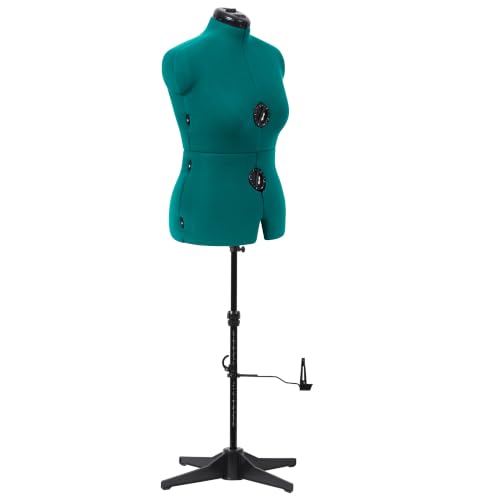
- 12-point adjustment system for closer body matching
- Height-adjustable pole and hem marker for tailoring
- Foam-backed surface supports secure pinning
Best For: Tailors who need a highly adjustable form in US sizes 12-18
Budget Display Dress Form

- Pinnable foam torso for direct fabric work
- Height-adjustable from about 51 to 66 inches
- Tool-free assembly with wooden tripod base
Best For: Budget users needing a lightweight pinnable form in size 6
Extended Fit Dress Form
Dritz Twin-Fit Adjustable Dress Form

- 13 adjustment points with 12 auto-set dials
- Torso length extends up to 2 inches
- Foam-backed surface supports pinning and measuring
Best For: Sewists who need detailed fit control plus adjustable torso length
High-Height Adjustable Dress Form
Purple Female Sewing Dress Form

- 13 adjusters for neck, bust, waist, hips, and back
- Height adjusts up to 75 inches
- Flannel and sponge cover makes pinning easier
Best For: Sewists who want a tall adjustable form in size 4-16
Precision-Fit Adjustable
Dritz My Double Adjustable Dress Form, Small Size US 4-14

- 12 rolling wheels for precise size changes
- Foam-backed surface is easy to pin
- Includes 360-degree hem marker and height adjustments
Best For: Detailed fitting and alterations in a small size range
Display-Ready Torso
Female Dress Form Mannequin Torso with Adjustable Stand

- Pinnable linen cover for sewing and draping
- Height adjusts from 59" to 85"
- No-tool assembly and lightweight movement
Best For: Boutiques and sewists needing a simple display-friendly torso form
Classic Adjustable Fit
SINGER Female Adjustable Dress Form, Medium/Large

- 12 dials adjust key body areas
- Foam-backed flannel surface is pinnable
- 360-degree hem guide helps with marking
Best For: Everyday home sewing, fitting, and hemming
Tall adjustable fitting form
BHD BEAUTY 13-dial XL dress form

- 13 adjustment points for custom fitting
- Foam-backed cover is pinnable and markable
- Height-adjustable XL design
Best For: Sewists who need a taller, fully adjustable body double
Mobile tailoring form
Black adjustable dress form size 6-14

- 13 wheel adjustments for fine fitting
- Lockable rolling base for mobility
- Cotton cover works well for pins
Best For: Small studios and sewists who need a movable form
Pants-ready tailoring form
Adjustoform Sew Deluxe S-M dress & pants form

- 12 thumb wheels for detailed adjustment
- Offset column leaves space for pants work
- Includes Pin Grip Hem Marker
Best For: Sewists who need one form for dresses and pants
Precision Fit Adjustable Dress Form – Dritz Sew You Adjustable Dress Form
If you want dress forms for tailoring that can track real body measurements closely, this Dritz Sew You model is built for fine-tuning fit and drape. Its 12-point adjustment system, height-adjustable center pole, and 360-degree hem marker make it practical for garment shaping, measuring, and pinning with fewer guesswork steps.
Best For: Sewists who need a highly adjustable form for fitting garments in US women’s sizes 12-18.
Pros:
- 12 multi-point body adjustments help match bust, waist, hips, neck, and more.
- Height-adjustable center pole supports shoulder-to-floor matching for more accurate draping.
- Foam-backed surface allows secure angled pinning.
- Easy to record measurement settings on the adjustment wheels for repeat use.
Cons:
- Limited to the listed medium/large size range.
- Plastic and metal construction may feel less traditional than foam-and-fabric torsos.
- Assembly and adjustments may take time if you frequently change sizes.
This is a strong choice if your priority is accurate fitting rather than simple display. The opal green finish and adjustable details make it a useful studio tool for tailoring projects that need repeatable, measurement-driven results.
Budget Display Dress Form – Bonnlo Female Dress Form
Bonnlo Female Dress Form Pinnable Mannequin Body Torso with Wooden Tripod Base Stand (White, 6)
Check Price On AmazonFor dress forms for tailoring on a simpler budget, this Bonnlo torso gives you a pinnable foam body with a wooden tripod base. It focuses on the essentials: direct pinning, adjustable height, and a stable enough stand for displaying and working on dresses, suits, and decorative garments.
Best For: Beginners or budget-minded users who want a lightweight pinnable form for size 6 garments.
Pros:
- Solid foam torso allows direct pinning anywhere on the body.
- Height adjusts from about 51 to 66 inches.
- Wooden tripod base adds a classic display look.
- Tool-free assembly and disassembly are quick and simple.
Cons:
- Size range is limited to approximately US women’s size 6.
- Less adjustment detail than multi-dial tailoring forms.
- Built more for display and basic fitting than precision customization.
This model makes sense if you need a straightforward pinnable form without a complex adjustment system. It is light, easy to move, and suitable for basic fitting, display, and garment presentation work.
Extended Fit Dress Form – Dritz Twin-Fit Adjustable Dress Form
This Dritz Twin-Fit is a practical option if you want dress forms for tailoring with a little more refinement in torso length and fit control. The 13 adjustment points, 12 auto-set dials, extendable torso, and adjustable center pole make it useful for shaping garments where both size and proportion matter.
Best For: Sewists in US sizes 12-18 who need adjustable torso length for more precise fitting.
Pros:
- 13 multi-point body adjustments support detailed fitting changes.
- Torso length extends up to 2 inches for proportion tuning.
- 12 auto-set dials use clear 1/2-inch increments.
- Foam-backed surface and adjustable hem marker aid pinning and measuring.
Cons:
- Designed for a medium size range rather than broad universal use.
- Plastic build may not appeal to shoppers wanting a more traditional torso form.
- Adjustment setup can be more involved than a basic display mannequin.
Overall, this is a strong tailoring tool for users who need both standard size adjustment and extra torso-length control. The silver-gray finish also gives it a cleaner, more professional studio appearance.
High-Height Adjustable Dress Form – Purple Female Sewing Dress Form
If you are comparing dress forms for tailoring and want extra height adjustment, this purple mannequin stands out with its up-to-75-inch range and 13 adjustment dials. The flannel-and-sponge cover is designed to make pinning and marking easier, while the four-footed base adds steady support for garments and decorative materials.
Best For: Tailors and hobby sewists who want a tall, easy-to-pin adjustable form in size 4-16.
Pros:
- 13 adjusters let you change neck, bust, waist, hips, and back measurements.
- Height adjusts up to 75 inches for a taller working range.
- Flannel cover with sponge layer improves pinning and marking.
- Includes a 360-degree pin-grip hem marker for hem setup.
Cons:
- Size coverage is limited to the stated 4-16 range.
- Plastic construction may not feel as rigid as heavier-duty forms.
- Color and design are more distinctive than neutral studio options.
This form is a good pick if height flexibility is important in your sewing setup. It combines broad adjustment, easy pinning, and quick assembly, making it a versatile option for tailoring and display.
Precision-Fit Adjustable – Dritz My Double Adjustable Dress Form, Small Size US 4-14
If you need dress forms for tailoring that let you fine-tune fit with confidence, this Dritz My Double is built for detailed garment work. The adjustable wheels, height changes, and pin-ready surface make it a practical choice for altering pants, jackets, gowns, and other pieces that need exact shaping.
Best For: Sewists who want a highly adjustable form for fitting, draping, and alterations across a small size range.
Pros:
- 12 rolling wheels allow precise bust, waist, and hip adjustments with inch/cm markings.
- Foam-backed surface supports secure pinning from multiple angles.
- 360-degree pin hem marker helps with more accurate hemming and tailoring.
- Adjustable center pole and torso length extension improve draping accuracy.
Cons:
- Only fits the small size range listed, so it is not ideal for all body types.
- More adjustment features may take extra time to set up.
Overall, this is a strong pick for tailoring work where measurement control matters more than simplicity. Its detailed adjustment system and stable, studio-style design make it especially useful for sewists who regularly fit garments to exact proportions.
Display-Ready Torso – Female Dress Form Mannequin Torso with Adjustable Stand
For dress forms for tailoring that also work well as a display piece, this female torso mannequin offers a simple pinnable surface and an adjustable stand. It is suited to sewing rooms, boutiques, and styling tasks where you want a clean-looking form for dresses, tops, skirts, and wedding garments.
Best For: Sewists and retailers who want a lightweight, adjustable torso form for both sewing and display.
Pros:
- Linen fabric cover is made to hold pins for sewing and draping.
- Stand adjusts from 59″ to 85″ overall height.
- Steel pole and gold metal base provide stable support.
- No tools required for assembly or disassembly.
Cons:
- Torso-only design is less versatile than a full adjustable dress form.
- Body measurements are fixed, so it is not meant for extensive size changes.
This is a practical option if you want a mannequin that can handle both sewing tasks and presentation. Its pin-friendly cover and tall adjustable stand make it useful for quick setup in a home workspace or boutique environment.
Classic Adjustable Fit – SINGER Female Adjustable Dress Form, Medium/Large
If you are comparing dress forms for tailoring and want a familiar adjustable option, this SINGER model covers a useful medium/large size range. It includes 12 dials, a foam-backed flannel exterior, and a 360-degree hem guide, giving home sewists a straightforward way to fit, pin, and measure garments.
Best For: Home sewists who want an easy-to-use adjustable dress form for everyday fitting and hemming.
Pros:
- 12 dials adjust neck, bust, waist, hips, and height.
- Foam-backed flannel surface makes pinning patterns and garments easier.
- 360-degree hem gauge supports more precise marking and basting.
- No tools required for assembly.
Cons:
- Size range is limited to medium/large measurements.
- Tripod-style base may take up more floor space than a compact stand.
This SINGER form is a solid all-around pick for routine sewing projects and alterations. It balances adjustability and ease of use, making it a dependable choice if you want a familiar dress form that is ready for repeated fitting work.
Tall adjustable fitting form – BHD BEAUTY 13-dial XL dress form
If you want dress forms for tailoring that can be dialed in to match your measurements, this XL adjustable mannequin is built for that workflow. It gives you 13 key adjustment points for the bust, waist, hips, neck, back, and height, plus a foam-backed nylon cover that is made for pinning and marking while you work.
Best For: Tailors and sewists who want a fully adjustable, pinnable female dress form with a taller height range.
Pros:
- 13 adjustment points for bust, waist, hips, neck, back, and height
- Foam-backed nylon cover supports pinning and marking
- Height adjustment makes it easier to match your working setup
- XL size suits users who need a larger form
Cons:
- Tripod base may take up more floor space than a simple stand
- Designed around a specific fit range, so it is not universal
Overall, this is a practical choice if you need an adjustable dress form that can be personalized for sewing and fitting rather than used only for display. The combination of multiple dials and a pinnable cover makes it a strong fit for hands-on tailoring work.
Mobile tailoring form – Black adjustable dress form size 6-14
For dress forms for tailoring that need to move easily around a workspace, this black adjustable mannequin focuses on flexibility and stability. It uses 13 soft-grip rolling wheels for body adjustments, a height range of about 42.5 inches to 60 inches, and a four-leg rolling base with lockable casters for easier positioning.
Best For: Sewers and small shops that want a movable adjustable dress form with a pinnable cotton cover.
Pros:
- 13 rolling wheels allow detailed body adjustments
- Height adjusts from about 42.5″ to 60″
- Four-leg rolling base improves mobility and stability
- 100% cotton cover is ideal for pinning and marking
Cons:
- Plastic construction may not feel as substantial as heavier forms
- Small size range may not suit every body type
This model is a good pick if you want a practical tailoring form that can be rolled out of the way or locked in place when needed. It balances adjustability, mobility, and pin-friendly coverage in a format that works well for sewing and display.
Pants-ready tailoring form – Adjustoform Sew Deluxe S-M dress & pants form
If your dress forms for tailoring needs include both garments and trousers, this adjustable form stands out for its pants-friendly design. It uses 12 thumb wheels for bust, waist, hips, neck, back length, and height adjustments, and the offset column leaves the crotch area clear so you can work on pants more easily.
Best For: Tailors who need an adjustable female form for dresses, skirts, and pants fitting.
Pros:
- Eight-part body with 12 adjustable thumb wheels
- Offset column supports pants creation by avoiding a center pole through the crotch
- Includes a sturdy metal tripod base
- Pin Grip Hem Marker helps with dress and skirt hem marking
Cons:
- Size range is narrower than some larger or more universal forms
- Assembly and storage still depend on a tripod stand setup
This is a smart option if you want one mannequin that can handle both standard fitting and pants work. The included hem marker adds extra usefulness for accurate finishing, making it especially appealing for practical sewing projects.
How We Picked These Dress Forms for Tailoring
We focused on size coverage, adjustment range, stability, pinnability, and whether the form is useful for real sewing tasks like fitting seams, checking balance, and refining hems. We also considered whether a model is better suited to light alterations, garment construction, or more detailed tailoring work.
Quick Comparison
Adjustable dress forms are the most flexible choice if your measurements vary or you sew for different people. Fixed-size forms can be a better value if you work within one size range and want a simple torso for draping or display. For more advanced Dress Forms for Tailoring, look for multi-dial adjustment, a strong base, and features that support accurate pinning and marking.
Key Buying Factors for Dress Forms for Tailoring
Size Range and Adjustability
Match the form to the sizes you sew most often. A wide adjustment range helps if you make garments across multiple sizes, but the best fit still depends on bust, waist, and hip coverage rather than dress size alone.
Stand and Stability
A tripod or weighted base should hold the form steady while you pin or drape fabric. If you plan to work on heavier garments, prioritize a form with a stable stand and easy height adjustment.
Pinnable Surface
For tailoring, a pinnable cover is essential. It lets you mark darts, seams, and hemlines directly on the form and helps you test garment shaping more accurately.
Body Shape and Proportions
Not all forms reflect the same proportions. Consider shoulder slope, bust depth, and torso length if you often make fitted garments. A more realistic silhouette usually produces better fitting results.
Special Features
Some models include hem guides, split dials, or multi-piece sections that improve precision. These features are especially helpful when you want cleaner hems, smoother drape evaluation, or faster repeated adjustments.
Who Should Buy Which Dress Forms for Tailoring?
If you are a beginner, choose a straightforward adjustable form with a stable base and a size range close to your own measurements. If you sew for clients or make garments in multiple sizes, a more flexible adjustable model is worth the extra cost.
If your main goal is draping, fitting, and alteration work, prioritize pinnability and proportion over display appearance. If you only need a form for occasional projects, a simpler torso stand may be enough. For frequent garment work, the best Dress Forms for Tailoring are the ones that stay steady, adjust easily, and match your pattern-making needs.