A quality serger can trim, stitch, and finish fabric edges in one pass, but choosing the right machine under a $300 budget requires more than comparing stitch-speed claims. Threading design, stitch options, frame construction, and included accessories can make a major difference in everyday use.
We’ve gathered 10 affordable overlock machines spanning beginner-friendly models, heavy-duty metal-frame designs, and versatile 2-, 3-, 4-, and 5-thread configurations. Use the guide below to narrow the list based on your fabrics, sewing experience, and workspace.
Best 10 Sergers Under 300 Picks for 2026
Heavy-Duty Pick
SINGER 0420 Next Evolution Serger

- 13 stitch options with 4/3/2-thread capability
- Metal frame and heavy-duty motor
- Differential feed plus large cutting blade
Best For: Versatile sewing across lightweight, stretch, and heavier fabrics
Beginner-Friendly Pick
MILLEPUNTI MLD41 Metal Frame Serger

- Seven built-in stitches with 3/4-thread options
- Up to 1,250 stitches per minute
- Includes thread, tools, manual, and storage
Best For: Beginners learning everyday seam finishing
Easy-Threading Pick

- 2/3/4-thread capability
- Color-coded guides and numbered loopers
- Carbon-steel blade and built-in rolled hem
Best For: Home sewing with simpler threading and precise trimming
Compact Overlock Pick
Four-Thread SRT-H56567 Overlocker
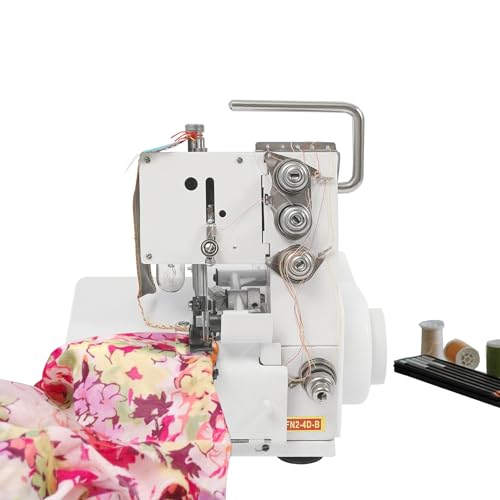
- Four-thread edge trimming and finishing
- Up to 1,200 stitches per minute
- Adjustable pitch, width, and tension
Best For: Focused fabric edge finishing with customizable settings
Best for Easy Setup

- Open threading area supports easier setup
- 12 stitches and 1,300 stitches per minute
- Differential feed, rolled hem, and scrap bin
Best For: Beginners seeking convenient setup and flexible edge finishing
Heavy-Duty Value
2/3/5-Thread Serger Sewing Machine

- Flexible 2/3/5-thread operation
- Metal frame with 112W motor
- Supports rolled, lettuce, and overlock hems
Best For: Home sewing projects requiring five-thread versatility
Fabric-Control Choice

- Adjustable differential feed for knits
- 2/3/4-thread stitch versatility
- Integrated knives trim edges while sewing
Best For: Garment makers handling stretch and mixed-weight fabrics
Compact 4-Thread Pick

- 1,200 stitches per minute with a 100W motor
- Cuts and overlocks edges in one step
- Cast-iron frame with foot-control operation
Best For: Home sewists needing compact four-thread edge finishing
Best Simple Pick
Adjustable 4-Thread Overlocker

- 100W motor reaches 1,200 stitches per minute
- Adjustable pitch and individual thread tension
- Cast-iron body weighs 16.5 pounds
Best For: Users wanting sturdy construction and manual stitch control
Most Versatile Pick
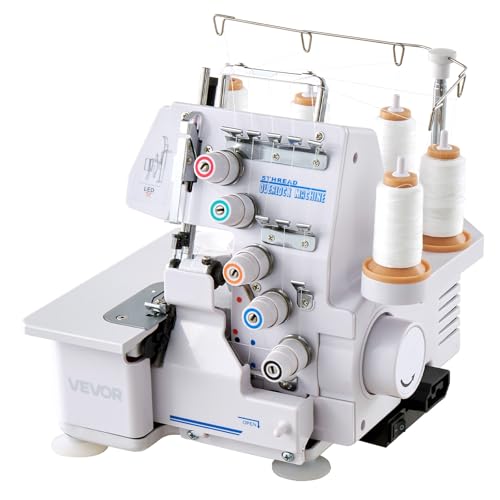
- Supports 2-, 3-, and 5-thread setups
- Runs up to 1,250 stitches per minute
- Includes rolled hem, edging, and lettuce hem options
Best For: Sewists needing flexible thread and stitch configurations
Heavy-Duty Pick – SINGER 0420 Next Evolution Serger
For shoppers comparing sergers under 300, the SINGER 0420 stands out for its 13 stitch options, sturdy metal interior frame, and heavy-duty motor. Its 4/3/2-thread capability supports everyday overlocking, rolled hems, flatlocking, and work with stretch or heavier fabrics.
Best For: Sewists who want broad stitch versatility and stronger support for mixed fabric weights.
Pros:
- Offers 13 stitch options with 4/3/2-thread capability.
- Heavy-duty motor and full metal interior frame provide stable support.
- Differential feed helps reduce stretching and puckering.
- Includes a spare lower-cutter blade, needles, tools, and a dust cover.
Cons:
- Its wider feature set may involve more setup than a basic entry-level serger.
- The supplied notes do not specify an included threading guide or instructional accessories.
The large cutting blade and differential feed make this a flexible option for garments, linens, crafts, and fabrics that vary in weight. It is a strong choice when versatility matters as much as basic seam finishing.
Beginner-Friendly Pick – MILLEPUNTI MLD41 Metal Frame Serger
Among sergers under 300, the MILLEPUNTI MLD41 focuses on approachable everyday sewing. Its seven built-in stitches, 3/4-thread options, differential feed, and free arm make it a practical starting point for finishing seams, sleeves, cuffs, and simple stretch projects.
Best For: Beginners who want essential serger functions and a useful accessory package.
Pros:
- Seven built-in stitches and flexible 3/4-thread operation keep the selection straightforward.
- Runs at up to 1,250 stitches per minute for efficient sewing.
- Differential feed supports stretch fabrics and lightweight materials.
- Includes thread, needles, tools, cleaning brush, manual, and built-in accessory storage.
Cons:
- Offers fewer stitch options than more feature-rich models.
- Manufactured for U.S. 120V use and not recommended with voltage converters.
The MLD41 keeps the learning curve focused on core overlocking tasks while adding helpful features such as a free arm and differential feed. Its included supplies make it easier to begin basic garment and stretch-fabric projects.
Easy-Threading Pick – FEIYUE FY505 Serger
For shoppers seeking sergers under 300 with straightforward setup, the FEIYUE FY505 combines 2/3/4-thread capability with color-coded guides and numbered loopers. Its metal frame, carbon-steel blade, built-in rolled hem, and adjustable differential feed cover common home sewing needs.
Best For: Home sewists who value guided threading and clean edge cutting.
Pros:
- 2/3/4-thread capability accommodates varied sewing projects.
- Color-coded guides and numbered loopers simplify threading.
- Extra-hard carbon-steel blade supports precise, smooth edge cutting.
- Includes built-in rolled hem and adjustable differential feed.
Cons:
- Its maximum speed of 1,100 stitches per minute is lower than some options in this roundup.
- The supplied notes list an embroiderer plate but do not detail a larger accessory kit.
The FY505 is a sensible choice when threading clarity and dependable trimming are priorities. Its 2/3/4-thread flexibility and rolled-hem function provide useful coverage for everyday garments and fabric projects.
Compact Overlock Pick – Four-Thread SRT-H56567 Overlocker
This four-thread machine offers a focused option for shoppers comparing sergers under 300. It trims and locks fabric edges while providing adjustable needle pitch, hemming width, and thread tension for projects using cotton, silk, denim, and other compatible fabrics.
Best For: Sewists who want a compact four-thread overlocker with adjustable settings.
Pros:
- Four-thread overlocking combines edge trimming and seam finishing.
- Reaches up to 1,200 stitches per minute with a 100W motor.
- Adjustable needle pitch, hemming width, and thread tension support fabric-specific setup.
- Includes foot-pedal control, LED work light, and anti-slip mats.
Cons:
- Only four-thread operation is specified, with no listed 2/3-thread capability.
- The supplied dimensions indicate a relatively tall footprint for compact sewing spaces.
- The listed power source is hand-powered despite the electric motor and foot control description.
With its cast-iron construction and adjustable stitch settings, this model is geared toward practical edge finishing rather than a broad range of stitch types. Check the dimensions and power details carefully before choosing it for a small sewing area.
Best for Easy Setup – 360 Serger Overlock Machine
If you are comparing sergers under 300, the 360 Serger Overlock Machine stands out for its accessible open threading area and beginner-friendly setup. It supports 2/3/4-thread serging, offers 12 stitch options, and runs at up to 1,300 stitches per minute for efficient edge finishing.
Best For: Beginners and home sewers who want easy threading, differential-feed control, and a ready-to-sew machine.
Pros:
- Open threading area and visual alignment guide simplify setup and troubleshooting.
- Offers 12 stitch types, rolled hems, and 2/3/4-thread configurations.
- Differential feed helps manage knits, sheer fabrics, and stretchy materials.
- Includes LED lighting, a scrap bin, accessory compartment, storage bag, and safety switch.
Cons:
- Supports up to four threads rather than five-thread configurations.
- The supplied notes do not specify the included accessory set in detail.
Its open-access threading design and factory-tested, pre-threaded setup make this a practical choice for new serger users. Differential feed and the rolled-hem function also give it useful flexibility for garments and home-decor projects.
Heavy-Duty Value – 2/3/5-Thread Serger Sewing Machine
For shoppers seeking sergers under 300 with a metal build and broad thread flexibility, this overlock machine supports 2/3/5-thread sewing. Its 112W motor reaches up to 1,250 stitches per minute and is designed for hemming, edging, garment sewing, and everyday fabric finishing.
Best For: Home sewers who want five-thread capability, a metal frame, and stitch control across fabrics from chiffon to denim.
Pros:
- 2/3/5-thread configurations support strong seams, edging, and decorative stitches.
- Metal frame and 112W motor provide a sturdy foundation for household sewing.
- Color-coded threading guides and LED lighting help with setup and visibility.
- Handles overlock, rolled-hem, edging, and lettuce-hem styles.
Cons:
- The supplied notes do not mention differential feed.
- Only a user manual is listed among the included components.
- At 1,250 stitches per minute, it is slightly slower than some higher-speed options.
This model is a strong fit when five-thread versatility and a metal construction matter more than advanced fabric-feed features. Adjustable stitch dimensions and presser-foot control add useful adaptability for varied fabric thicknesses.
Fabric-Control Choice – FEIYUE FY503 Serger
The FEIYUE FY503 is a focused option among sergers under 300 for sewists who want adjustable fabric handling. Its 2/3/4-thread capability, differential feed, color-coded guides, and integrated cutting system support clean seams on knits, elastic fabrics, lightweight materials, and denim.
Best For: Garment makers working with stretch fabrics, knits, and mixed-weight materials who want differential-feed adjustment.
Pros:
- Supports overlock seams, rolled hems, flatlock stitches, and stretch mock safety stitches.
- Differential feed helps control stretching and feeding on knits and elastic fabrics.
- Color-coded threading paths and independent tension dials aid setup and adjustment.
- Built-in upper and lower knives trim fabric edges while sewing.
Cons:
- Supports up to four threads rather than five-thread operation.
- The supplied notes do not describe a built-in LED light or scrap bin.
- At 1,100 stitches per minute, it has the lowest stated speed of these three models.
The FY503 prioritizes controlled fabric feeding and clean edge trimming over maximum speed. Its combination of differential feed, adjustable tension, and multiple stitch formats makes it particularly useful for clothing projects involving stretch or difficult-to-feed fabrics.
Compact 4-Thread Pick – Cast-Iron Serger with Cutter
If you want a straightforward option among sergers under 300, this 4-thread machine combines edge trimming and overlocking in one step. Its 100W motor reaches up to 1,200 stitches per minute, while the cast-iron housing offers a stable, compact setup for home sewing and smaller projects.
Best For: Home sewists who want fast four-thread edge finishing in a compact metal-frame machine.
Pros:
- Trims fabric and overlocks the edge in one operation.
- Four-thread construction creates stronger, cleaner seams than a three-thread design.
- Foot controller supports hands-free speed control, and the LED light improves visibility.
Cons:
- Offers four-thread operation rather than the broader thread range of some sergers.
- The listed dimensions are relatively tall at 19.29 inches.
This is a practical choice if durable construction, a built-in cutter, and efficient four-thread finishing matter more to you than a wide selection of stitch configurations.
Best Simple Pick – Adjustable 4-Thread Overlocker
For shoppers comparing sergers under 300, this heavy-duty 4-thread overlock machine emphasizes sturdy construction and adjustable stitch control. It uses a 100W motor for speeds up to 1,200 stitches per minute and provides separate tension settings for adapting the finish to different fabrics.
Best For: Sewists who prioritize a durable cast-iron build and hands-on control over stitch pitch and thread tension.
Pros:
- Adjustable needle pitch ranges from 0.1 to 0.13 inches.
- Individual thread tension settings help tailor seams for different fabrics.
- Four-thread locking configuration produces a compact edge finish.
- Cast-iron construction is designed to resist abrasion and deformation.
Cons:
- Provides four-thread capability rather than multiple thread configurations.
- At 16.5 pounds, it may be less convenient to move frequently.
This model suits users who are comfortable making manual adjustments and want a solid machine for recurring home-clothing, craft, or heavier sewing tasks.
Most Versatile Pick – VEVOR 2/3/5-Thread Serger
This VEVOR model stands out among sergers under 300 for its 2-, 3-, and 5-thread capability. A 112W motor reaches up to 1,250 stitches per minute, while adjustable stitch settings, color-coded threading, an LED light, and strong suction feet support a broad range of fabric-finishing tasks.
Best For: Sewists who want flexible thread setups and stitch options for repairs, rolled hems, edge finishing, and decorative hems.
Pros:
- Supports 2-, 3-, and 5-thread configurations.
- Offers overlock, rolled hem, edging, and lettuce hem stitch styles.
- Color-coded threading helps simplify setup.
- Strong suction feet and an adjustable presser foot support stable fabric handling.
Cons:
- The iron-and-plastic body is not an all-metal construction.
- Its 18-pound weight may make storage and repositioning less convenient.
- The listed power source is hand powered, which may warrant checking the product listing details before purchase.
Choose this machine when versatility is the priority. Its wider thread range and multiple stitch styles make it the most adaptable option here for varied finishing techniques.
How We Picked the Best Sergers Under 300
We evaluated these machines around the features that matter most at this price: thread capability, maximum sewing speed, stitch versatility, construction, threading access, lighting, fabric handling, and practical home-use features. We also considered whether each model appears suited to beginners, experienced sewists, occasional mending, or higher-volume projects.
Specifications can vary by seller and production run, so confirm the current listing for included feet, needles, warranty coverage, dimensions, and accessory details before ordering. A low price is useful only if the machine’s setup and support match your expectations.
Quick Comparison
| Feature | What to look for | Why it matters |
|---|---|---|
| Thread options | 2/3/4 or 2/3/5 thread capability | Determines stitch flexibility and finishing options |
| Speed | About 1,200–1,250 stitches per minute | Helps complete seams and edge finishing quickly |
| Construction | Metal frame or reinforced housing | Can improve stability and durability |
| Ease of setup | Open threading path, color-coded guides, accessible controls | Reduces frustration when changing threads |
| Lighting and feeding | LED work light, adjustable differential feed, strong presser-foot control | Supports visibility and smoother fabric handling |
Key Buying Factors for Sergers Under $300
Thread Capability and Stitch Selection
Four-thread machines are a practical choice for general garment construction because they create a strong seam while finishing the edge. Three-thread settings are useful for lightweight seam finishing and rolled-edge work. Five-thread models may provide more flexibility for reinforced seams, but they can require more setup and threading skill.
Threading and Adjustment Features
Threading is often the biggest learning curve. Look for color-coded paths, wide-opening covers, clear diagrams, and easy access to the loopers. Adjustable stitch length, cutting width, presser-foot pressure, and differential feed are valuable when working with knits, slippery fabrics, or different thicknesses.
Stability, Speed, and Workspace
Fast machines are not automatically better. A stable metal-frame design, strong suction feet, or a solid base can help reduce vibration at high speed. Check the machine’s footprint and weight if you need to store it after each project. An LED light is helpful, although it does not replace good room lighting.
Accessories and Support
Compare what comes in the box, including tweezers, needles, spare cutters, screwdrivers, thread nets, and specialty feet. Clear manuals, replacement parts, return policies, and manufacturer support can be especially important for lesser-known models.
Who Should Buy Which Sergers Under 300?
- Beginners: Choose a straightforward 2/3/4-thread model with accessible threading, clear controls, and dependable basic overlock stitches.
- Garment makers: Prioritize four-thread capability, differential feed, adjustable cutting width, and reliable fabric control.
- Frequent home sewists: Consider a metal-frame machine with a stable base, higher speed, and convenient LED lighting.
- Budget-conscious shoppers: Focus on the included accessories, warranty, and replacement-part availability rather than speed alone.
- Advanced users: A 2/3/5-thread model may be worthwhile if you want more seam and finishing options and are comfortable with additional threading.
The best serger for you depends on the fabrics and techniques you use most. For a first machine, prioritize ease of threading and stable basic performance; for heavier workloads, favor stronger construction and broader stitch flexibility.