Choosing the best watercolor paper for detailed work can make fine lines, layered washes, and small botanical or architectural subjects far easier to control. The right surface balances texture, absorbency, weight, and durability without fighting your brush.
This roundup compares 10 selected pads, blocks, and loose-sheet options across professional and budget-friendly categories, so you can match paper performance to your technique, project size, and working style.
Best 10 Watercolor Paper for Detailed Work Picks for 2026
Classic Cotton Choice

- 100% cotton, 300 gsm paper
- Cold-press texture in a 9-by-12-inch pad
- 12 sheets for watercolor painting
Best For: Premium detailed watercolor work
Bulk Practice Pick

- 84 loose 5-by-7-inch sheets
- Acid-free 230 gsm paper
- Works with wet and dry media
Best For: Classroom practice and small studies
Versatile Budget Pad

- 20 sheets of 300 gsm paper
- Cold-pressed, acid-free surface
- Suitable for watercolor and mixed media
Best For: Students and budget-minded mixed-media artists
Professional Small-Format Pick

- 100% cotton, cold-pressed paper
- Designed to withstand heavy saturation
- 15 sheets in a compact 5-by-7-inch pad
Best For: Detailed small-format watercolor paintings
Large-Format Detail Pad
Strathmore 300 Series Watercolor Pad

- 11-by-15-inch, 140-pound cold-press paper
- Textured and smooth sides on each sheet
- Acid-free and suitable for varied wet media
Best For: Large watercolor studies and flexible surface options
Versatile Cold-Press Sketchbook
Pacocoast 9x12 Watercolor Paper
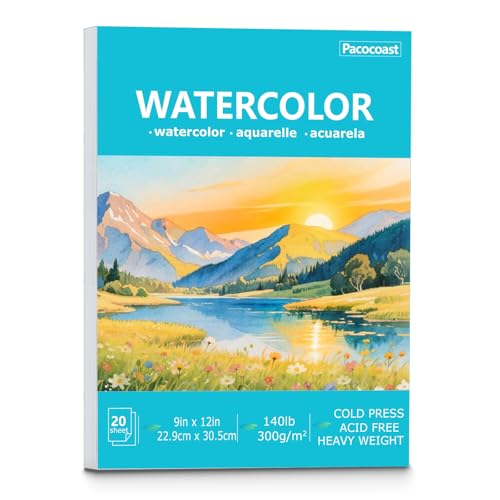
- 20 sheets of 140-pound cold-press paper
- Removable pages from a glue-bound pad
- Works with wet, dry, and mixed media
Best For: Mixed-media practice and removable artwork
Cotton Detail Block
Fuumuui 100% Cotton Watercolor Paper
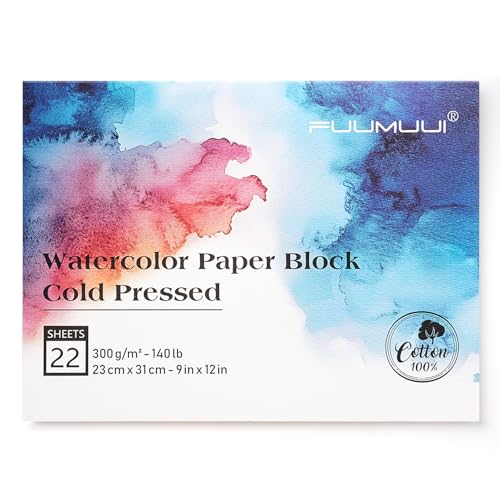
- 100% cotton, 140-pound cold-press paper
- 22 sheets with hardboard backing
- Designed for layering, masking, and erasing
Best For: Layered watercolor and durable mixed-media studies
Best Bulk Value
5 x 7-Inch Cold-Press Watercolor Paper

- 80 sheets for practice and projects
- 230 GSM cold-press surface
- Compact format for cards and small studies
Best For: Beginners, students, and frequent practice
Professional Control
Arches 100% Cotton Cold-Press Pad
- 100% cotton, 9 x 12-inch sheets
- Core-sized for blending and paint removal
- Resists scratching, erasing, and tearing
Best For: Experienced artists and finished detailed work
Portable Cotton Pad

- 30 cotton sheets at 300 GSM
- Portable A5 format
- Single-sided glued binding for easy separation
Best For: Travel painting, detailed studies, and mixed media
Classic Cotton Choice – Arches Cold Press Paper
For watercolor paper for detailed work, the Arches pad offers a premium 100% cotton surface with a cold-press texture. Its 300 gsm weight and 9-by-12-inch format provide a substantial working area for painting and watercolor projects.
Best For: Artists who want a high-quality cotton pad for detailed watercolor painting and value a choice of established paper textures.
Pros:
- Made from 100% cotton with long fibers and a natural white color.
- 300 gsm, 140-pound paper provides a sturdy painting surface.
- Includes 12 sheets in a practical 9-by-12-inch pad.
Cons:
- Contains fewer sheets than the bulk paper options in this roundup.
- Cold-press texture may not suit artists specifically seeking a smooth hot-press surface.
Arches is the premium-focused option here, combining cotton construction with a respected cold-press finish. It is a strong fit when paper quality and a refined working surface matter more than maximizing sheet count.
Bulk Practice Pick – 5×7 Cold Press Paper
This 5-by-7-inch paper is a practical choice for watercolor paper for detailed work when you need many small sheets for studies, cards, or classroom projects. The 230 gsm cold-press surface supports wet and dry media while keeping the format easy to handle.
Best For: Students, classrooms, beginners, and artists who need an economical supply of small sheets for practice and mixed-media projects.
Pros:
- Includes 84 loose sheets for frequent practice or group use.
- Acid-free 230 gsm paper is designed for wet and dry media.
- Cold-press texture supports watercolor, gouache, acrylic, ink, and drawing tools.
Cons:
- The 5-by-7-inch size offers less room for larger compositions.
- At 230 gsm, it is lighter than the 300 gsm pads included here.
The main advantage is quantity: this set makes it easy to experiment without using premium pad sheets for every study. Choose it for small-format work and regular practice rather than large, heavily saturated paintings.
Versatile Budget Pad – Hapikalor 9×12 Paper
Hapikalor provides watercolor paper for detailed work in a familiar 9-by-12-inch pad format. Its 140-pound, 300 gsm cold-pressed surface is designed for watercolor and mixed media, while the 20-sheet count keeps the pad practical for regular use.
Best For: Art students and mixed-media artists who want heavyweight paper at an economical price.
Pros:
- 20 sheets of 300 gsm, 140-pound cold-pressed paper.
- Acid-free, neutral-pH sheets suit watercolor and numerous dry media.
- 9-by-12-inch format offers room for detailed compositions and studies.
Cons:
- The supplied details identify the color as teal, which may not match every artist’s preference.
- The paper is described as suitable for many media, but no specific saturation-performance claim is provided.
This pad balances sheet count, heavyweight construction, and versatility. It is especially appealing if you want one economical surface for watercolor, drawing, and mixed-media experimentation.
Professional Small-Format Pick – Winsor & Newton 5×7
For watercolor paper for detailed work in a compact format, this Winsor & Newton pad combines 100% cotton with a cold-pressed, medium-grain surface. Its internally and externally sized construction is intended to support water absorbency, pigment dispersion, and lasting color adherence.
Best For: Artists creating small, detail-focused paintings who want professional cotton paper that can handle substantial water use.
Pros:
- 100% cotton paper made on a traditional cylinder mold.
- Designed to resist warping or cockling when saturated with large volumes of water.
- Internally and externally sized for water handling and pigment dispersion.
- 15 sheets in a portable 5-by-7-inch pad.
Cons:
- The 5-by-7-inch format limits the size of finished paintings.
- With 15 sheets, it provides less paper than the 20- and 84-sheet alternatives.
This is the most technically focused small-format option in the group. Its cotton construction, sizing, and stated resistance to saturation make it a compelling choice for controlled details and richly wet passages.
Large-Format Detail Pad – Strathmore 300 Series Watercolor Pad
For artists seeking watercolor paper for detailed work in a larger format, this 11-by-15-inch Strathmore pad offers 12 sheets of heavyweight, acid-free, cold-press paper. Each sheet has a heavily textured side and a smooth side, giving you flexibility for washes, fine marks, and other wet-media techniques.
Best For: Artists who want a spacious pad with two surface options for watercolor, journaling, and varied wet-media work.
Pros:
- Large 11-by-15-inch sheets provide ample working space.
- 140-pound heavyweight paper is durable for watercolor.
- Acid-free paper accepts a variety of wet media.
- Each sheet offers one heavily textured side and one smooth side.
Cons:
- Only 12 sheets are included.
- The larger format may be less convenient for portable work.
This pad stands out for its generous size and dual-surface design. It is a practical choice when detailed studies, journaling spreads, or larger compositions benefit from both texture and smoother mark-making.
Versatile Cold-Press Sketchbook – Pacocoast 9×12 Watercolor Paper
This Pacocoast pad is a practical option for watercolor paper for detailed work when you also want compatibility with dry and mixed media. Its 9-by-12-inch, 140-pound cold-press sheets are designed to absorb pigments evenly, while the glue-bound format lets you remove finished pages for display or sharing.
Best For: Beginners, illustrators, and mixed-media artists who want a removable-page watercolor pad for studio or travel use.
Pros:
- Includes 20 sheets of heavyweight 140-pound paper.
- Cold-press texture balances pigment absorption and surface detail.
- Glue binding allows pages to be removed cleanly.
- Supports watercolor, acrylic, colored pencil, graphite, pen, markers, charcoal, and pastels.
Cons:
- The notes do not specify a cotton-fiber composition.
- Its 9-by-12-inch format offers less room than larger pads.
The removable-page binding gives this pad added flexibility: keep work together as a sketchbook or separate individual pieces for presentation. Its broad media compatibility also makes it useful for artists who move between precise drawing and watercolor.
Cotton Detail Block – Fuumuui 100% Cotton Watercolor Paper
For watercolor paper for detailed work that prioritizes a cotton surface, the Fuumuui block combines 100% cotton, 140-pound weight, and a cold-pressed texture in a 9-by-12-inch format. Its cylinder-mold construction is described as supporting uniform fibers, repeated layering, masking fluids, and erasing.
Best For: Artists who want cotton paper for layered watercolor, detailed mixed-media work, and art journaling.
Pros:
- 100% cotton, acid-free paper is designed for lasting artwork.
- 22 sheets provide more pages than the other listed pads.
- Cylinder-mold construction is intended to resist scratching, erasing, masking fluids, and tape.
- Glue binding and a hardboard backing support individual-sheet use.
Cons:
- The block is limited to a 9-by-12-inch format.
- Cold-press texture may be less suitable for artists seeking a completely smooth surface.
With cotton fibers, a sturdy backing, and features aimed at repeated handling, this block is especially compelling for controlled layering and detail-focused experimentation. It also supports watercolor, gouache, acrylic, ink, pencils, and other mixed media.
Best Bulk Value – 5 x 7-Inch Cold-Press Watercolor Paper
For watercolor paper for detailed work on a budget, this bulk pack offers 80 cold-press sheets in a compact 5 x 7-inch format. Its 230 GSM weight, textured surface, and stated good absorbency make it practical for studies, cards, sketches, and repeated practice.
Best For: Beginners, students, children, card-making, and artists who want a large supply of small sheets.
Pros:
- Includes 80 sheets for frequent practice or group projects.
- Cold-press texture and good absorbency support even pigment distribution.
- Compact size works well for invitations, greeting cards, and small studies.
Cons:
- Its 5 x 7-inch format may feel limiting for larger compositions.
- At 230 GSM, it is lighter than the 300 GSM and 100% cotton options in this roundup.
This is the practical quantity pick for detailed miniatures and everyday experimentation, especially when keeping material costs down matters more than professional-grade paper construction.
Professional Control – Arches 100% Cotton Cold-Press Pad
For watercolor paper for detailed work where handling and finish matter, the Arches pad provides 12 sheets of 100% cotton cold-press paper in a 9 x 12-inch size. Its cylinder-mold construction, core sizing, and resistance to scratching and erasing are suited to controlled layering, blending, and paint removal.
Best For: Experienced watercolorists, finished paintings, detailed studies, and mixed techniques including gouache, ink, and acrylic.
Pros:
- 100% cotton fibers provide a premium surface and durable handling.
- Core sizing helps with blending, overlays, transparency, and paint removal.
- Designed to resist scratching, erasing damage, tearing, and linting.
- Edge-glued pad makes sheets easy to remove.
Cons:
- Only 12 sheets are included, so it offers less volume for practice.
- Its professional positioning may be more than beginners need for casual projects.
Among these options, this is the strongest choice for intricate work that benefits from repeated adjustments and dependable surface performance, though the smaller sheet count favors select finished pieces over high-volume practice.
Portable Cotton Pad – A5 300 GSM Cold-Press Paper
This A5 pad is a versatile option for watercolor paper for detailed work when you want a portable format with more substantial 300 GSM paper. The 30 cotton sheets have a cold-press texture, good absorbency, and single-sided glued binding for easy flipping and separation.
Best For: Portable painting, watercolor enthusiasts, beginners, mixed-media practice, and artists who prefer a tearable pad.
Pros:
- 300 GSM cotton paper offers a substantial surface for watercolor work.
- A5 dimensions are easy to carry for painting on the go.
- Single-sided glued binding allows sheets to flip and separate conveniently.
- Suitable for painting, drawing, mixed media, and handmade cards.
Cons:
- The 30-sheet pad provides fewer pages than the 80-sheet bulk pack.
- A5 size is less suitable for large compositions.
This balances portability, durability, and convenience well. It is a particularly useful middle-ground choice for detailed studies and travel painting when you want cotton paper without committing to a larger professional pad.
How We Picked the Best Watercolor Paper for Detailed Work
We focused on the paper characteristics that matter most when painting small subjects or building precise layered effects: surface texture, paper weight, cotton content, sheet size, binding style, and value. Cold-pressed paper is featured heavily because its moderate texture provides enough tooth for controlled washes while remaining more forgiving than heavily textured rough paper.
We also considered practical details such as acid-free construction, sheet quantity, portability, and whether a pad, block, or loose-sheet format best suits the way you work. Professional cotton papers generally offer superior wet-on-wet control and lifting performance, while cellulose or mixed-fiber options can be economical for studies and practice.
Quick Comparison
| Best For | Recommended Paper Type | Why It Works |
|---|---|---|
| Professional finished work | 100% cotton, 140 lb/300 gsm | Strong surface, reliable layering, and better wet handling |
| Fine lines and small details | Cold press, moderate texture | Provides pigment control without an overly rough surface |
| Travel and quick studies | 5 x 7-inch pad or wired pad | Compact, easy to carry, and efficient for smaller paintings |
| High-volume practice | 110 lb/230 gsm bulk paper | Lower cost per sheet for exercises and color testing |
| Reduced buckling | 140 lb/300 gsm block or pad | Handles more water with less preparation than lighter stock |
Key Buying Factors for Watercolor Paper for Detailed Work
Surface Texture
Cold-pressed paper is usually the most versatile choice for detail. Its subtle grain catches pigment while still allowing sharp edges, glazing, and controlled brushwork. Hot-pressed paper is smoother and can be excellent for extremely fine linework, but it may show blooms and uneven washes more readily.
Weight and Buckling
Paper weighing 140 pounds or 300 gsm is a strong all-purpose option for detailed watercolor painting. It tolerates repeated wetting better than 110-pound paper and generally needs less stretching. Lighter 230 gsm sheets are useful for practice, but tape or a drawing board may be necessary for wet techniques.
Cotton Content and Surface Strength
100% cotton paper is typically more durable, absorbent, and responsive when lifting or layering. It is the better investment for finished work, while budget cellulose sheets can make sense for thumbnails, studies, and classroom practice.
Format and Binding
Pads are flexible and convenient, blocks hold sheets flatter during painting, and loose sheets offer the most freedom for custom sizing. Choose a compact 5 x 7-inch format for travel or studies and a 9 x 12-inch or larger pad when you need room for detailed compositions.
Who Should Buy Which Watercolor Paper for Detailed Work?
Professional artists: Choose a 100% cotton, 140 lb/300 gsm cold-pressed option for dependable layering, corrections, and archival-quality results.
Detail-focused hobbyists: A well-made cold-press pad in the 9 x 12-inch range offers a useful balance of control, workspace, and cost.
Students and beginners: Affordable 110 lb/230 gsm bulk paper is practical for learning brush control, testing palettes, and completing frequent exercises.
Traveling artists: Pick a small wired pad or compact block that fits your kit and keeps individual studies organized.
Artists who use lots of water: Favor 140 lb/300 gsm paper, especially a block or sturdy cotton pad, to minimize warping and preserve the surface through multiple washes.